Why Every Recruiting Team Needs a Sales Assessment Test
You’ve just hired a sales executive who seemed perfect in interviews. They had confidence, charm, and impressive answers. Fast forward three months, and targets are being missed, pipelines are weak, and managers are quietly frustrated. You’re left wondering:
“Where did we go wrong?”
This is exactly the pain point sales assessments are designed to solve.
A sales assessment test moves hiring away from guesswork and toward evidence-based decision-making, helping you identify candidates who can truly perform in real sales situations, not just talk about them.
What Is a Sales Assessment Test ?
A sales assessment test is a structured evaluation that measures how well a candidate can sell by testing practical sales skills, behaviors, and decision-making ability.
Instead of asking:
- “Tell me how you’d handle objections.”
You actually test:
- How they handle objections
- How they prioritize leads
- How they communicate under pressure
This is why many hiring teams now rely on sales competency assessments, sales behavioral assessments, and sales personality assessments to make smarter hiring decisions.
Platforms like SkillRobo help companies deliver these assessments online, at scale, with automated scoring and insights.
Why Sales Assessment Tests Matter
Sales assessment tests provide a structured way to evaluate a candidate’s true selling skills, going beyond surface impressions from resumes or interviews. By measuring critical competencies like communication, negotiation, and resilience, assessments ensure hiring decisions are based on proven abilities, not guesswork. They help organizations build stronger, more reliable sales teams.
Objective Evaluation Over Subjective Impressions
Traditional interviews and resumes can often paint an incomplete or even misleading picture of a candidate’s true abilities. Candidates who excel in interviews may lack the real-world skills necessary to close deals, build customer trust, or consistently meet sales targets.
Sales assessments introduce an objective, standardized method of evaluation, allowing hiring teams to focus on proven skills rather than relying solely on personality or presentation.
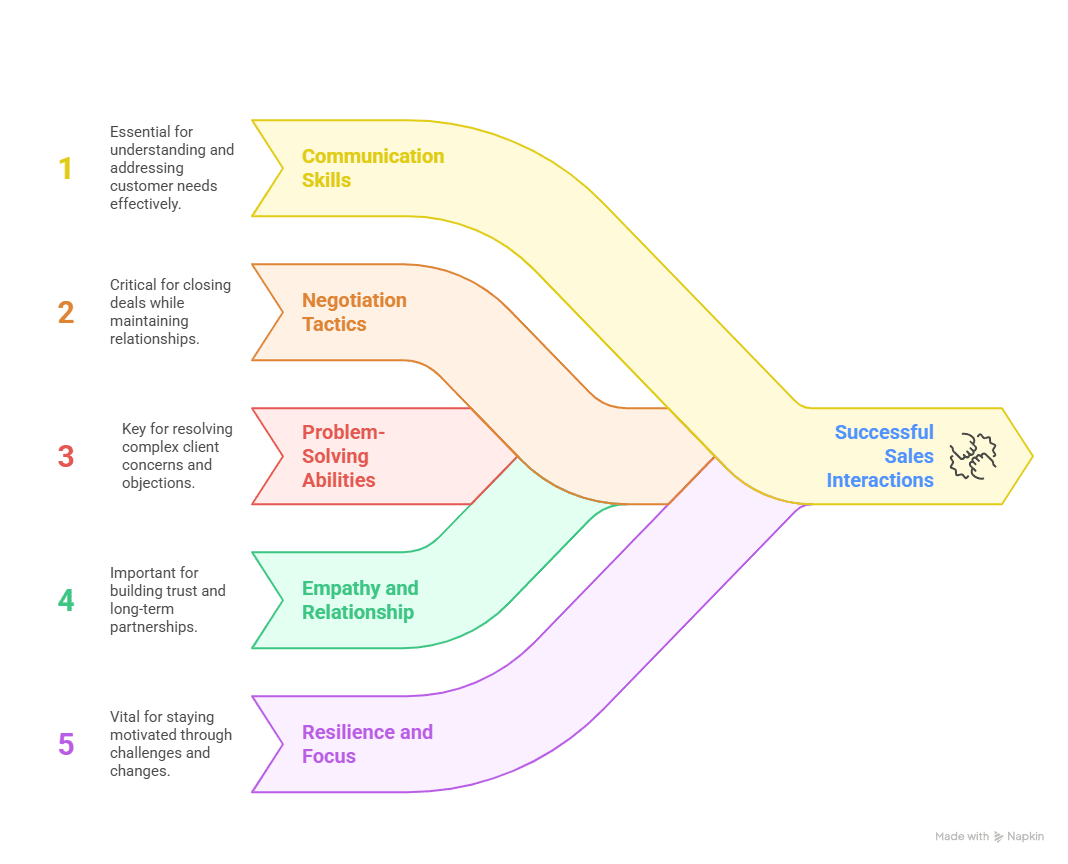
The core competencies assessed through structured evaluations typically include:
1. Communication and Active Listening: Essential for understanding customer needs and presenting solutions effectively.
2. Negotiation and Persuasion: Critical for closing deals and overcoming objections without damaging relationships.
3. Problem-Solving and Objection Handling: Key for navigating complex client concerns and removing barriers to sales.
4. Customer Empathy and Relationship Management: Important for building trust, loyalty, and long-term partnerships.
5. Goal Orientation and Resilience: Vital for maintaining motivation through rejection, market fluctuations, and changing customer demands.
By evaluating these capabilities in real-world scenarios, such as simulated client meetings, CRM tasks, or objection handling exercises, sales assessments provide measurable, actionable insights into how a candidate is likely to perform on the job.
This data-driven approach ensures that hiring decisions are based on demonstrated competencies, reducing the risks associated with gut-feel hiring and significantly improving sales team effectiveness.
Why Interviews Alone Fail at Predicting Sales Performance
Most sales leaders don’t intend to hire poorly. The issue is that interviews are structurally flawed for sales hiring.
Here’s what typically goes wrong:
- Confident speakers dominate interviews
- Rehearsed answers mask real capability.
- Past experience is assumed to equal future performance.
- Interviewers interpret answers differently.
- Bias creeps in unconsciously
Sales interviews reward storytelling, not execution.
That’s why hiring teams increasingly rely on sales assessment tools to bring consistency, fairness, and realism into the hiring process.
Types of Sales Assessments
Type of Sales Assessment | Choose If |
Sales Skills Assessment | You want to evaluate how well candidates handle real selling situations like objections, follow-ups, and closing conversations |
Sales Behavioral Assessment | You want to understand how candidates respond to pressure, rejection, and uncertainty over time |
Sales Personality Assessment | You want to check the alignment between a candidate’s natural traits and the demands of the sales role |
Situational Judgment Assessment | You want to see how candidates make decisions when there is no obvious right answer |
Cognitive and Aptitude Assessment | You are hiring for roles that involve complex products, fast learning, or strategic problem-solving |
Role Specific Sales Assessment | You are hiring for specialized sales roles where generic assessments are not enough. |
Not all sales assessments are designed to measure the same thing. That is where many hiring teams go wrong.
They use one test and expect it to answer every hiring question. In reality, different sales assessments focus on different parts of sales performance. Knowing what each type measures helps you choose the right combination, not just the most popular test.
Sales Skills Assessments
Sales skills assessments focus on what candidates can actually do in selling situations.
These tests evaluate practical abilities such as communication, questioning, objection handling, negotiation, and closing judgment. Candidates are often placed in scenarios that reflect real sales conversations and asked to respond as they would on the job.
This type of assessment is especially useful when you want to know whether a candidate can move deals forward, not just talk confidently about sales concepts.
Sales Behavioral Assessments
Behavioral assessments look at how candidates typically act in sales environments, especially under pressure.
They help reveal patterns such as how candidates handle rejection, respond to stress, and stay motivated when results are slow. These traits matter because sales performance is rarely consistent or predictable.
Behavioral assessments are valuable when you are hiring for long-term roles where resilience and adaptability matter as much as skill.
Sales Personality Assessments
Personality assessments help you understand how a candidate’s natural tendencies align with the role.
They do not label candidates as good or bad. Instead, they highlight preferences such as competitiveness, assertiveness, empathy, and risk tolerance.
For example, a highly aggressive personality may perform well in high-volume outbound sales but struggle in relationship-driven enterprise roles. Personality assessments help prevent these mismatches before they happen.
Sales Situational Judgment Assessments
Situational judgment assessments present candidates with realistic workplace scenarios and ask them to choose how they would respond.
These assessments are useful for evaluating decision-making, ethics, prioritization, and practical judgment. There is often no single correct answer, which allows hiring teams to see how candidates think rather than what they memorize.
This type of assessment works well for roles that involve complex sales cycles and multiple stakeholders.
Sales Cognitive and Aptitude Assessments
Cognitive and aptitude assessments measure how quickly candidates process information, identify patterns, and solve problems.
In sales roles that involve complex products, data-driven conversations, or strategic planning, these abilities play a major role in success.
These assessments are particularly helpful when candidates are transitioning into sales from different industries or when experience levels vary widely.
Role Specific Sales Assessments
The most effective sales hiring strategies use role-specific assessments rather than one-size-fits-all tests.
An inside sales role may emphasize speed, call handling, and objection response. An enterprise sales role may focus on strategic thinking, long deal cycles, and relationship management.
Role-specific assessments ensure that candidates are evaluated on what actually matters for the job they are being hired to do.
Why Most Teams Use More Than One Type
No single sales assessment can capture everything.
Strong hiring processes combine multiple assessment types to build a clearer picture of a candidate. Skills assessments show what candidates can do. Behavioral and personality assessments explain how they do it. Situational and cognitive assessments reveal how they think.
Together, they reduce guesswork and help teams hire salespeople who perform consistently, not just interview well.
What Sales Assessments Actually Measure (That Interviews Don’t)
Interviews tell you how well someone talks about selling.
Sales assessments reveal how well they actually sell.
That difference matters more than most hiring teams realize, especially in sales roles where performance pressure, rejection, and split-second decision-making are part of daily work.
Sales assessment tests are built to surface capabilities that rarely show up in interviews, even when interviewers ask the “right” questions.
Communication and Listening in Real Sales Situations
In an interview, candidates have time to think. They control the conversation and respond in a low-pressure environment. Real sales conversations are very different.
Sales assessment test evaluate whether candidates can listen actively while processing new information and responding in the moment. They reveal if a candidate can identify genuine customer pain points, ask relevant follow-up questions, and explain value clearly without sounding rehearsed.
A candidate may describe themselves as a strong communicator in an interview. A sales assessment shows whether they can extract meaningful insights from incomplete or unclear customer input and respond appropriately.
Objection Handling Without Rehearsed Answers
Most sales candidates can explain how they handle objections. Far fewer can demonstrate it under pressure.
Sales assessments test how candidates react when objections appear unexpectedly. They assess whether the candidate pauses to understand the objection, becomes defensive, or immediately pushes back without listening.
When faced with pricing resistance or hesitation, strong performers ask clarifying questions and reposition value. Weak performers often rush to discounts or generic responses. These differences become obvious in assessments but are rarely visible in interviews.
Decision-Making and Prioritization Skills
Sales roles require constant decision-making. Candidates must decide which leads to prioritize, when to follow up, and how to balance short-term wins with long-term relationships.
Sales assessment tests place candidates in realistic scenarios where time is limited, and information is incomplete. These situations reveal how candidates think, not just what they know.
Interviews reward confidence in answers. Assessments expose judgment, logic, and the ability to make trade-offs under pressure.
Behavioral Traits That Impact Sales Performance
Sales success depends heavily on behavior, not just skill.
Sales behavioral and personality assessments help identify how candidates respond to rejection, pressure, and uncertainty. They reveal whether a candidate remains motivated after setbacks, adapts when an approach does not work, or becomes discouraged quickly.
These behavioral patterns directly affect performance and retention. Interviews rarely uncover them because candidates naturally present an ideal version of themselves.
Coachability and Willingness to Adapt
Sales environments change constantly. Processes evolve, messaging shifts, and buyer expectations increase.
Sales assessments can highlight how open a candidate is to feedback and how quickly they adjust their approach when something fails. This learning agility is one of the strongest predictors of long-term success, especially in fast-moving sales teams.
Interviews often focus on past achievements. A sales assessment test focuses on how candidates learn and adapt going forward.
Consistency and Fair Comparison Across Candidates
One of the most important advantages of sales assessments is consistency.
Interviews vary based on who conducts them and how responses are interpreted. Sales assessments apply the same criteria to every candidate, making comparisons fair and objective.
Hiring teams can evaluate candidates based on performance signals rather than personal impressions. This reduces bias and creates confidence in hiring decisions.
Why This Matters in Modern Sales Hiring
Sales roles today demand adaptability, resilience, and strong decision-making. Buyers are informed, skeptical, and short on time.
Sales assessments help bridge the gap between interview performance and real-world selling ability. They do not replace interviews. They make interviews more focused, meaningful, and effective.
When hiring decisions are supported by structured assessments, teams stop guessing and start hiring with clarity.
What Do Sales Assessment Questions Look Like in Practice?
If you are picturing a long list of generic multiple-choice questions, that is not how modern sales assessments work.
Good sales assessment questions feel familiar. They look like situations your team deals with every week. The difference is that instead of talking about these situations in an interview, candidates are asked to respond to them directly.
This is where assessments start revealing things interviews never do.
Realistic Sales Scenarios That Feel Uncomfortably Familiar
Sales assessment questions often begin with scenarios that make hiring managers nod in recognition.
A prospect goes quiet after a demo.
A buyer says the price is too high and mentions a competitor.
A deal that looked promising stalls.
Candidates are asked what they would do next. There is no perfect answer. What matters is how they think through the situation.
Some candidates jump straight into aggressive follow-ups. Others freeze. Strong candidates usually slow down, gather context, and choose an approach that balances persistence with respect.
These responses tell you far more than an interview ever could.
Objection Handling Questions That Test More Than Confidence
In interviews, objection handling sounds polished. Everyone knows the “right” phrases to use.
In assessments, objections show up without warning.
Candidates may be told that a prospect questions the product’s value or pushes back on timing. The assessment watches how the candidate reacts in that moment. Do they listen first or rush to defend? Do they ask questions or immediately try to close?
What you are really evaluating here is composure. Can the candidate stay calm when a deal starts to slip? Can they think clearly when the conversation gets uncomfortable?
Prioritization Questions That Reflect Real Sales Pressure
Sales teams are constantly short on time. Leads pile up. Not everything can be handled at once.
Sales assessment questions often simulate this pressure by giving candidates multiple leads or tasks and asking how they would prioritize them.
This reveals whether a candidate focuses on quick wins, long-term opportunities, or simply reacts without a plan. It also shows how well they understand deal value, urgency, and effort.
Interviews rarely expose this because candidates can always say they are “good at prioritizing.” Assessments show what that actually means in practice.
Follow-Up and Persistence Questions
Another common area sales assessments explore is follow-up behavior.
Candidates might be asked how they would handle a prospect who has not responded after multiple attempts. Do they keep pushing the same message, change their approach, or know when to step back?
This matters because poor follow-up habits either kill deals or damage relationships. Sales assessment questions help you see whether candidates understand the balance between persistence and pressure.
Short Answer and Role Play Style Questions
Not all sales assessment questions are multiple choice.
Some ask candidates to write short responses or record brief audio or video answers. These questions are especially useful for evaluating tone, clarity, and empathy.
For example, a candidate may be asked to draft a follow-up message to a hesitant buyer or respond to a customer concern. You can immediately see whether their communication feels natural or scripted.
This is often where strong candidates separate themselves from average ones.
What Hiring Teams Learn From These Questions
By the time a candidate completes a sales assessment, hiring teams gain insights that interviews simply do not provide.
You see how candidates think under pressure.
You understand how they approach objections and uncertainty.
You learn how they prioritize, communicate, and adapt.
Instead of guessing whether someone can sell, you are watching them do it in a controlled, consistent environment.
That is why sales assessment questions work. They do not reward confidence alone. They reward judgment, awareness, and real selling behavior.
Free vs Paid Sales Assessments: What Hiring Teams Should Know
This is usually the first question hiring teams ask.
“Can we just use a free sales assessment?”
The short answer is yes. The more honest answer is that it depends on what you are trying to achieve.
Free and paid sales assessments serve very different purposes, and understanding that difference upfront saves a lot of frustration later.
Where Free Sales Assessments Actually Help
Free sales assessments are a good starting point, especially for teams that are new to structured hiring.
They can help you get a basic sense of whether a candidate understands sales fundamentals. For entry-level roles, internships, or early screening, this may be enough.
Free assessments are often useful when you want to experiment. You can see how candidates respond to structured questions and how assessments fit into your hiring process without committing to a tool or budget.
For candidates, free sales assessment practice tests can also set expectations and reduce anxiety by showing what kind of situations they might be evaluated on.
The Limitations You Notice Very Quickly
Once hiring volume increases or roles become more complex, the limitations of free assessments become hard to ignore.
Most free tools offer generic questions that are not tailored to your sales process or target market. They rarely adjust for different roles, industries, or deal sizes.
Scoring is usually basic. You might get a pass or fail result, but little insight into why a candidate performed the way they did.
Security is another concern. Free tools often lack safeguards against copying answers or outside help, which makes results less reliable.
At this point, hiring teams start feeling like they are still guessing, just with more steps.
What Paid Sales Assessments Change
Paid sales assessment platforms are built for teams that want consistency and clarity, not just screening.
They allow you to customize assessments based on role, experience level, and sales environment. An inside sales role does not get evaluated the same way as an enterprise sales role, and paid tools reflect that.
You also get deeper insights. Instead of a simple score, you see breakdowns of communication style, objection handling, prioritization, and behavioral patterns.
For hiring managers, this makes interviews easier. Instead of starting from scratch, they can focus on specific strengths and gaps revealed by the assessment.
Reliability and Scale Matter More Than You Think
When you are hiring one salesperson, free tools may feel sufficient.
When you are hiring five, ten, or more, reliability starts to matter much more.
Paid sales assessments offer standardized scoring, better data tracking, and repeatable results across candidates. This makes it easier to compare candidates fairly and defend hiring decisions internally.
It also reduces early attrition, which is often far more expensive than the cost of a paid assessment tool.
How Many Teams Actually Use Both
In practice, many hiring teams use a mix of free and paid assessments.
Free tools are used early on for exploration or basic screening. Paid assessments come into play when roles are critical, stakes are higher, or hiring needs to scale.
The key is knowing when a free tool is helping and when it is holding you back.
The Bigger Picture Most Teams Miss
The assessment itself is only one part of the process.
As hiring grows, teams also need to manage assessment links, candidate follow-ups, score reviews, approvals, and interview scheduling. Doing this manually quickly becomes messy.
This is where workflow automation tools like Cflow quietly add value by connecting assessments to the rest of the hiring process. Results flow automatically to the right people, decisions are tracked, and nothing falls through the cracks.
So when comparing free and paid sales assessments, it helps to think beyond the test itself. The real goal is a hiring process that is fair, repeatable, and easy to manage at scale.
How Sales Assessment Tools Fit into Real Hiring Workflows
On paper, hiring looks simple. In reality, it rarely is.
Resumes come in through different channels. Recruiters are juggling multiple roles. Hiring managers are busy closing deals of their own. In this environment, sales assessments only work when they fit naturally into the hiring flow, not when they feel like an extra task.
That is why sales assessments are most effective when they are triggered automatically as part of the application process.
Once a candidate applies, the assessment is sent out without manual follow-ups or reminders. Candidates complete it online at a time that works for them, and recruiters do not have to chase links or track spreadsheets.
When results come in, hiring managers receive structured reports instead of raw scores. They can immediately see how candidates performed on key areas like communication, objection handling, prioritization, and behavioral traits.
This changes how interviews are used. Instead of spending time filtering out weak candidates, interviews are reserved for those who have already demonstrated real sales potential. Conversations become more focused, more relevant, and far more productive.
The biggest benefit here is time. Less time is wasted on poor-fit candidates, and more time is spent evaluating people who have a genuine chance of succeeding in the role.
The Often-Ignored Problem: Managing Assessments at Scale
Everything works smoothly when you are hiring one salesperson.
The problems start when you are hiring across teams, locations, or roles.
Assessment links are sent late. Results sit in inboxes. Different managers interpret scores differently. Approvals get delayed because someone missed an email. Before long, what was meant to bring structure starts creating confusion.
This is not a failure of assessments. It is a failure of process.
As hiring volume grows, managing assessments manually becomes unsustainable. Recruiters end up tracking progress across tools, spreadsheets, and email threads. Important steps get skipped simply because no one owns them clearly.
This is where workflow automation quietly becomes essential.
With tools like Cflow, assessment-related actions are no longer dependent on memory or follow-ups. When a candidate completes an assessment, results are automatically routed to the right stakeholders. Approvals move through defined steps. Everyone sees the same information at the same time.
This consistency matters. It ensures that candidates are evaluated fairly, decisions are documented, and hiring does not slow down simply because someone was unavailable for a day.
Assessments help you identify who can sell.
Automation helps you make sure that insight actually leads to the right hire.
Together, they turn sales hiring into a process that is not just smarter, but scalable and reliable over time.
Wrapping Up
If you have ever hired a salesperson who looked perfect on paper but struggled once the real work began, you are not alone. Most sales hiring mistakes happen for the same reason. Too much trust in interviews and not enough evidence of how someone actually sells.
Sales assessment tests change that dynamic. They give you a clearer view of how candidates think, communicate, and respond when things do not go as planned. They help you move past gut feeling and toward decisions you can stand behind.
The teams that get this right are not replacing interviews. They are using assessments to make interviews better. More focused conversations. Fewer surprises after onboarding. Stronger hires who are prepared for the realities of selling.
If you are exploring ways to bring structure into your sales hiring, tools like SkillRobo make that transition easier. They help you run role-specific sales assessments, compare candidates fairly, and spot real selling ability early in the process without adding complexity for your team.
Better sales hiring is not about adding more steps. It is about asking better questions, earlier. When you do that consistently, the results speak for themselves.
Frequently Asked Questions(FAQs)
What is a sales assessment test?
A sales assessment test is a structured way to evaluate how well a candidate can sell, not just how well they talk about selling. It places candidates in realistic situations to assess skills like communication, objection handling, prioritization, and decision making. The goal is to predict real job performance before a hiring decision is made.
Are sales assessments better than interviews?
Sales assessments do not replace interviews. They make interviews more effective. Assessments help identify candidates with real sales potential early, so interviews can focus on meaningful conversations instead of basic screening. Used together, they reduce hiring mistakes and improve decision quality.
What types of sales roles benefit most from sales assessments?
Sales assessments are useful for most sales roles, including inside sales, SDRs, enterprise sales, and customer success positions. They are especially valuable for roles that involve high pressure, long sales cycles, or high turnover risk. Role-specific assessments tend to deliver the most accurate insights.
Can free sales assessments be trusted for hiring decisions?
Free sales assessments can be helpful for early screening or experimentation, but they often lack depth, customization, and reliable scoring. For critical roles or high-volume hiring, structured and paid assessment tools provide more consistent and actionable insights.
How long do sales assessment tests usually take?
Most sales assessment tests take between 30 and 60 minutes to complete. Well-designed assessments balance depth with candidate experience, ensuring they collect meaningful data without overwhelming candidates.
How do sales assessments reduce hiring bias?
Sales assessments apply the same evaluation criteria to every candidate. This allows hiring teams to compare performance objectively rather than relying on personal impressions. By focusing on how candidates respond to identical scenarios, assessments help reduce unconscious bias.
When should sales assessments be used in the hiring process?
Sales assessments work best early in the hiring process, typically after an application or initial screening. This helps teams identify high-potential candidates before investing time in interviews, making the overall process more efficient.
Do candidates need to prepare for sales assessments?
Candidates do not need special preparation. Sales assessments are designed to reflect real-world selling situations, so genuine experience and sound judgment matter more than memorized answers. Practice tests can help candidates become comfortable with the format.
How does SkillRobo support sales assessment hiring?
SkillRobo helps teams run structured, role-specific sales assessments that measure real selling ability. It enables consistent candidate comparison and allows hiring managers to focus interviews on candidates who are most likely to succeed.