Call Center Recruitment – Pre Employment Tests for Call Center Roles
TL;DR
Call center recruitment success depends on evaluating communication skills, emotional intelligence, and job readiness early in the hiring process.
Pre employment tests help organizations reduce attrition, improve customer satisfaction, and scale hiring efficiently across locations and work models.
Structured screening is essential for managing high-volume recruitment for call centers without compromising quality.
Assessment-led recruitment enables consistent hiring for remote, full-time, part-time, contract, and internship call center roles.
What Is Call Center Recruitment
Call center recruitment is the process of identifying, screening, and hiring candidates for customer-facing roles that handle inbound and outbound interactions across voice, chat, email, and support platforms. These roles form the frontline of customer experience, making recruitment quality directly tied to brand perception, customer satisfaction, and operational efficiency.
Unlike many traditional roles, recruitment for call canter roles does not rely heavily on academic credentials. Many organizations actively pursue recruitment for call center roles with no degree requirements, focusing instead on communication clarity, listening skills, empathy, adaptability, and reliability. This shift makes pre employment screening critical, as resumes rarely reveal how a candidate performs in real customer interactions.
Modern recruitment spans multiple employment models. Organizations hire for call center personnel full time to build stable service teams, while call center recruitment part time supports flexible staffing needs. Recruitment for call center roles contract is common during seasonal demand spikes, and internship programs help build early talent pipelines. The rise of remote recruitment remote has further expanded access to talent while introducing new screening challenges related to communication quality and self-discipline.
In this blog, you will gain a detailed understanding of the call center hiring process, how to evaluate call center candidates effectively, the benefits of pre employment assessments, the most common challenges in recruitment for call center roles, and how platforms like Skillrobo help streamline and standardize hiring at scale.
Understanding the Modern Call Center Recruitment Process
The recruitment process for call center roles typically begins with high-volume sourcing. Job postings for call center roles attract a large number of applicants due to flexible schedules, low entry barriers, and opportunities for remote work. While this creates a wide talent pool, it also increases screening complexity.
Traditional resume screening is often ineffective for call center roles. Candidates may meet basic criteria but lack the communication fluency, patience, or problem-solving ability required for customer-facing work. This results in recruiters spending significant time filtering unsuitable candidates or advancing candidates who later struggle on the job.
To address this, modern recruitment for call center roles processes integrate structured pre employment screening early. The process usually includes initial application filtering, communication and aptitude assessments, behavioral evaluation, and focused interviews. Organizations working with a recruitment agency or operating a centralized recruitment hub rely on standardized screening frameworks to maintain consistency across teams and locations.
As hiring volumes increase, automation becomes essential. Digital assessments, centralized dashboards, and automated shortlisting enable recruiters to manage scale while maintaining evaluation quality.
How to Evaluate Call Center Candidates Effectively
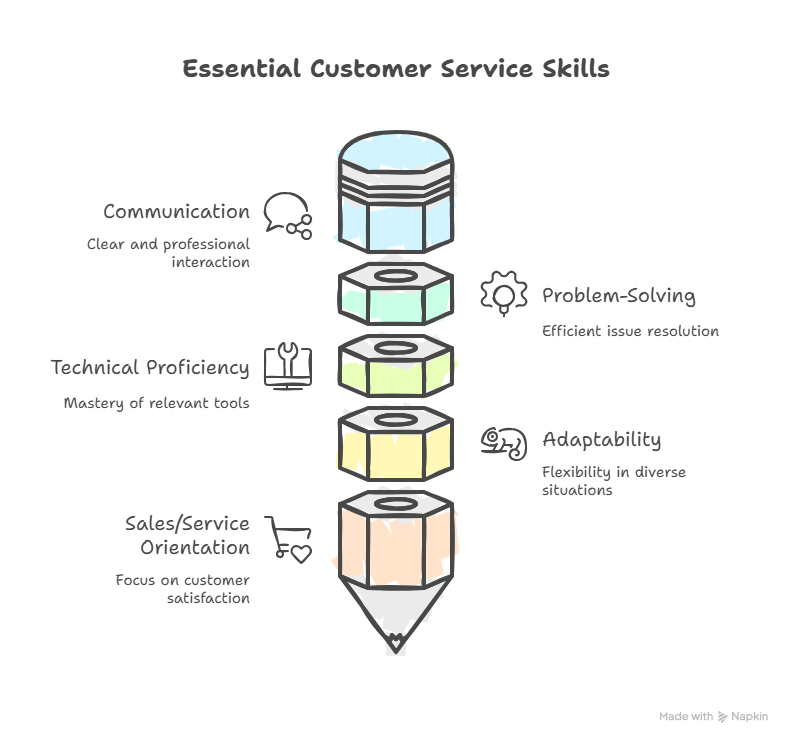
Evaluating call center candidates requires focusing on capabilities that directly impact customer interactions. Communication ability is the most critical factor. Candidates must demonstrate clear speech, comprehension, and the ability to respond calmly and accurately. Verbal reasoning and language proficiency assessments provide reliable insight into these skills.
Emotional intelligence is equally important. Call center agents frequently deal with frustrated or emotional customers. Evaluating how candidates handle conflict, manage stress, and maintain professionalism is essential. Behavioral assessments and situational judgment tests help predict how candidates will respond in real customer scenarios.
Problem-solving ability and attention to detail also play a key role. Agents must understand issues quickly, follow processes, and document interactions accurately. Aptitude assessments help identify candidates who can balance speed with accuracy in fast-paced environments.
Availability and role alignment are often overlooked but critical evaluation factors. Candidates applying for call center roles part time, full time, contract, or internship roles must align with scheduling, workload, and commitment expectations. Early screening prevents mismatches that often lead to early attrition.
Role of Pre Employment Tests in Call Center Recruitment
Pre employment tests play a foundational role in call center hiring because they address the core challenge of evaluating candidate suitability before real customer interactions begin. Call center roles are performance-driven and customer-facing, yet resumes and basic interviews offer limited insight into how candidates will actually behave on the job. Pre employment tests introduce objectivity into the screening process by measuring skills and traits that directly influence call center success.
One of the most important contributions of pre employment tests is their ability to assess communication capability at scale. Call center agents must listen actively, articulate responses clearly, and adapt their tone based on customer context. Communication assessments, language proficiency tests, and comprehension exercises help recruiters validate these abilities early, reducing the risk of hiring candidates who struggle with real-time interactions.
Pre employment tests also evaluate cognitive and operational readiness. Call center environments require agents to process information quickly, follow scripts, navigate systems, and resolve issues efficiently. Aptitude tests that assess logical reasoning, attention to detail, and task prioritization help identify candidates who can meet productivity and accuracy expectations without excessive supervision.
Behavioral and situational assessments further strengthen call center hiring by predicting how candidates respond under pressure. Dealing with dissatisfied customers, managing repetitive tasks, and maintaining composure during peak workloads are daily realities of call center roles. Pre employment tests that simulate real-world scenarios provide insight into resilience, patience, and emotional control, which are critical for long-term performance and retention.
By integrating pre employment tests early in the hiring process, organizations reduce reliance on subjective judgment, improve shortlisting accuracy, and create a more consistent and defensible hiring framework.
Benefits of Pre Employment Assessments for Call Center Roles
One of the most significant benefits of pre employment assessments for call center roles is improved quality of hire. Candidates who succeed in structured assessments are more likely to possess the communication clarity, problem-solving ability, and behavioral stability required to handle customer interactions effectively. This leads to stronger on-the-job performance and more consistent service quality.
Pre employment assessments also play a major role in reducing attrition, a long-standing challenge in recruitment for call center roles. Many early exits occur when candidates are unprepared for the emotional and operational demands of the role. Assessments help set realistic expectations by evaluating job readiness early, ensuring that candidates who move forward understand what the role entails and are capable of handling it.
Scalability is another critical benefit. Recruitment for call center roles often involves hiring in large volumes, especially during seasonal spikes or business expansion. Automated assessments allow recruiters to screen hundreds of candidates simultaneously without compromising evaluation accuracy. This makes it possible to scale hiring quickly while maintaining consistent standards.
Assessments also improve fairness and consistency across the recruitment process. Every candidate is evaluated using the same criteria, reducing bias introduced by resumes, referrals, or unstructured interviews. This supports equitable hiring practices and strengthens compliance with fair employment standards.
Finally, pre employment assessments significantly improve recruiter efficiency. Automated scoring, ranking, and reporting reduce manual effort, allowing recruitment teams to focus on interviews, onboarding, and workforce planning rather than repetitive screening tasks.
Challenges in Recruiting for Call Center Roles
One of the most common challenges in recruitment for call center roles is managing high application volumes with low signal quality. Many applicants meet basic requirements but lack essential communication or behavioral skills. Manual screening under these conditions leads to inconsistent outcomes.
Balancing speed with accuracy is another major challenge. Call centers often need to hire quickly to meet service demands. Rushed screening increases the risk of poor hires, which leads to higher training costs and attrition.
Remote hiring introduces additional complexity. Evaluating discipline, work environment suitability, and communication quality is harder without in-person interaction. Without structured assessments, recruiters rely heavily on interviews, which are subjective and inconsistent.
Retention remains a persistent challenge. Candidates often accept call center roles without fully understanding the emotional and performance demands. Poor expectation setting during recruitment leads to disengagement and early turnover.
These challenges highlight why structured pre employment screening is essential rather than optional in modern recruitment.
Call Center Recruitment Across Different Employment Models
Full time recruitment for call center roles focuses on long-term performance, stability, and growth potential. Screening emphasizes resilience, consistency, and ability to handle sustained workloads.
Part time recruitment for call center roles requires strong time management and adaptability. Assessments help identify candidates who can deliver consistent performance within limited schedules.
Contract based hiring prioritizes speed and immediate readiness. Pre employment tests ensure contractors meet performance standards with minimal onboarding.
Internship programs focus on learning ability and attitude. Screening evaluates communication foundation, adaptability, and growth potential rather than experience.
Remote recruitment for call center roles requires additional evaluation of self-discipline, communication clarity, and technical readiness. Structured assessments reduce the risk of remote performance issues.
Role of Call Center Recruitment Agencies and Recruitment Hubs
Recruitment agencies play a critical role in sourcing and screening talent, particularly for organizations that hire at scale or operate across multiple locations. These agencies act as an extension of internal HR teams, managing high applicant volumes and delivering shortlisted candidates who meet predefined criteria.
One of the key responsibilities of a recruiting agency is ensuring screening consistency. When agencies rely solely on resume reviews or informal interviews, candidate quality varies widely. Structured pre employment assessments enable agencies to evaluate candidates objectively, ensuring that shortlisted profiles meet communication, aptitude, and behavioral standards before being presented to employers.
Regional recruitment agencies, such as those operating in major call center markets, often support global clients with strict service-level expectations. Standardized assessments help these agencies align local talent screening with international performance benchmarks, reducing onboarding issues and client dissatisfaction.
Recruitment hubs further enhance efficiency by centralizing call center hiring operations. A recruitment hub consolidates sourcing, screening, and shortlisting into a single framework, enabling organizations to manage talent pipelines more effectively. When assessments are embedded into recruitment hubs, organizations gain better visibility into candidate performance data and hiring trends.
By combining the reach of recruitment agencies with the structure of centralized recruitment hubs, organizations can scale call center hiring while maintaining quality, consistency, and long-term workforce stability.
How Skillrobo Streamlines Call Center Recruitment
Skillrobo streamlines recruitment for call center roles by enabling organizations to assess communication skills, aptitude, and behavioral readiness through structured, role-aligned assessments. Instead of relying on resumes or subjective interviews, recruiters gain objective insight into candidate capability early in the hiring process.
Skillrobo supports high-volume recruitment by automating test delivery, scoring, and shortlisting. Recruiters can screen large applicant pools efficiently while maintaining consistent evaluation standards across remote, full-time, part-time, contract, and internship roles.
The platform helps reduce attrition by identifying candidates who are genuinely prepared for customer-facing work. Detailed performance insights enable recruiters to make confident decisions, improve role fit, and set clear expectations before onboarding.
By standardizing screening and reducing manual workload, Skillrobo allows hiring teams to focus on candidate engagement, onboarding, and long-term workforce planning.
Wrapping Up
Call center recruitment is one of the most demanding hiring functions due to volume, turnover, and performance pressure. Traditional screening methods are no longer sufficient to identify candidates who can succeed in customer-facing roles.
Pre employment tests provide the structure, scalability, and objectivity needed to improve hiring outcomes across full-time, part-time, contract, internship, and remote roles. Organizations that invest in assessment-led call center recruitment processes are better equipped to reduce attrition, improve service quality, and build resilient support teams.
FAQs
What skills are most important in call center recruitment?
Communication ability, emotional intelligence, problem-solving skills, and adaptability are the most critical skills for call center roles.
Can call center recruitment work without degree requirements?
Yes, many organizations focus on skills and aptitude rather than degrees, especially for entry-level and customer service roles.
How do pre employment tests reduce call center attrition?
They identify candidates who are job-ready and aligned with role expectations, reducing early exits and performance issues.
Is remote call center recruitment more challenging?
Remote recruitment adds complexity, but structured assessments help evaluate communication quality, discipline, and readiness effectively.
Why do call center recruitment agencies rely on assessments?
Assessments allow agencies to screen candidates at scale while maintaining consistent quality and meeting client performance standards.