Digital Recruitment Strategies: Transforming Talent Acquisition in Modern Workplaces
What Are Digital Recruitment Strategies?
Digital recruitment strategies refer to the structured use of digital channels, platforms, and technologies to attract, engage, assess, and hire candidates across different employment models. At its core, digital recruitment means goes beyond posting jobs online. It combines employer branding, data-driven sourcing, automation, and candidate experience design to build a scalable hiring engine.
In the modern hiring landscape, organizations rely on digital recruitment to manage everything from remote hiring to internship programs, contract staffing, and full-time workforce planning. These strategies define how companies reach candidates, communicate value, and move talent through a streamlined digital recruitment process.
In this blog, we explore what are the recruitment strategies used today, how modern recruitment strategies in the digital age have evolved, the tools and techniques that matter most, and how businesses can adapt digital recruitment strategies for 2026. You will also find role-specific approaches, practical frameworks, and clarity on what are the five recruitment strategies or methods recruiters rely on today.
Digital Recruitment: Meaning and Why It Matters Today
Digital recruitment’s meaning lies in using technology-first approaches to hiring rather than manual or location-bound methods. It replaces fragmented hiring activities with connected systems that improve reach, speed, and decision quality.
Organizations adopt digital recruitment strategies to solve real challenges such as talent shortages, high hiring volumes, remote workforce expansion, and inconsistent candidate experiences. With job seekers spending most of their time online, recruitment strategies that fail to meet candidates where they are risk becoming invisible.
A well-defined digital recruitment strategy allows companies to attract candidates continuously, evaluate talent objectively, and scale hiring without increasing recruiter workload. It also enables organizations to adapt quickly to market shifts, including hiring surges in the last month or sudden demand for contract or part-time roles.
What Are the Recruitment Strategies Used by Modern Organizations
Modern organizations no longer rely on a single hiring approach. Recruitment today is built on a combination of strategies that work together to attract, evaluate, and retain talent across roles, locations, and employment models. These strategies are shaped by candidate behavior, technology adoption, and the need for speed and quality in hiring.
Employer Branding as a Talent Magnet
Organizations actively invest in their employer brand to influence how potential candidates perceive them before a job application even begins. Career pages, employee stories, social media presence, and review platforms collectively shape trust and interest. A strong employer brand reduces sourcing effort because candidates are already familiar with the organization’s culture, values, and growth opportunities.
Proactive and Data-Driven Candidate Sourcing
Rather than waiting for applications, modern teams proactively identify and engage talent using digital platforms, professional networks, and talent databases. Recruiters analyze past hiring data to understand which channels deliver high-quality candidates and refine sourcing efforts accordingly. This approach improves hiring outcomes while reducing dependency on job boards alone.
Skill-Based and Role-Relevant Hiring
Organizations are shifting away from credential-heavy screening and focusing more on skills, competencies, and real-world performance indicators. Structured assessments, work samples, and role-specific evaluations help recruiters identify candidates who can perform effectively from day one. This strategy also expands access to diverse talent pools by removing unnecessary barriers.
Recruitment Automation for Speed and Consistency
Automation plays a critical role in managing high application volumes without compromising candidate experience. Tasks such as resume screening, interview scheduling, follow-ups, and status updates are automated to ensure timely communication. This allows recruiters to focus on decision-making, relationship building, and strategic planning instead of manual coordination.
Candidate Experience-Centered Hiring
Modern recruitment strategies prioritize how candidates experience every stage of the hiring journey. Clear communication, transparent timelines, mobile-friendly applications, and respectful feedback processes are no longer optional. Organizations recognize that a positive candidate experience influences acceptance rates, employer reputation, and future applications.
Talent Pipeline and Community Building
Instead of hiring only when a vacancy appears, organizations build long-term talent pipelines. Potential candidates are engaged through newsletters, events, content, and periodic communication. This approach ensures faster hiring during sudden demand spikes and reduces time-to-fill for critical roles.
Internal Mobility and Workforce Redeployment
Many organizations focus on identifying talent within their existing workforce before looking externally. Internal job marketplaces, upskilling programs, and career path visibility help retain high performers and fill roles faster. This strategy supports employee growth while reducing recruitment costs.
Recruitment Analytics and Continuous Optimization
Recruitment decisions are increasingly guided by metrics rather than intuition. Organizations track time-to-hire, quality of hire, candidate drop-off rates, and source effectiveness. These insights help teams continuously refine hiring strategies, eliminate bottlenecks, and improve overall recruitment performance.
Flexible Hiring Models for Diverse Workforce Needs
Modern recruitment strategies support multiple hiring models, including full-time, part-time, contract, internship, and remote roles. Processes are designed to adapt quickly to changing workforce demands without requiring separate systems for each hiring type. This flexibility is critical for scaling teams efficiently.
Together, these recruitment strategies reflect a shift from reactive hiring to structured, experience-driven, and data-backed talent acquisition. Organizations that integrate these approaches are better equipped to attract the right talent, make informed decisions, and build resilient teams in a competitive hiring landscape.
Top 5 Recruitment Strategies or Methods Recruiters Rely On
When hiring leaders ask what the five recruitment strategies or methods recruiters rely on are, the answer usually points to a combination of attraction, sourcing, engagement, evaluation, and long-term planning. These methods work together to help organizations hire consistently, even as roles, workforce models, and candidate expectations evolve.
Employer Branding and Talent Attraction
One of the most critical recruitment strategies recruiters rely on is employer branding. Candidates rarely apply without first evaluating a company’s culture, values, and credibility. Recruiters shape this perception through career pages, employee testimonials, social presence, and transparent communication about growth opportunities. A strong employer brand attracts candidates who are already aligned with the organization, reducing time spent screening mismatched applications and improving retention after hire.
Proactive Candidate Sourcing
Rather than waiting for applications, recruiters actively search for talent across digital platforms, professional networks, and internal databases. This approach allows teams to identify skilled candidates early and build relationships before roles become urgent. Proactive sourcing is especially effective for specialized roles, leadership positions, and competitive talent markets where speed and relevance matter most.
Candidate Engagement and Relationship Management
Another core method recruiters depend on is consistent candidate engagement. Hiring is no longer a one-way evaluation process. Candidates expect timely updates, clarity on next steps, and respectful communication throughout the journey. Recruiters use structured outreach, personalized follow-ups, and digital communication tools to keep candidates informed and engaged, which helps reduce drop-offs and improves overall hiring outcomes.
Structured Assessment and Screening
To make informed hiring decisions, recruiters rely on structured assessment methods rather than intuition alone. This includes standardized resume screening, skill-based evaluations, and consistent interview frameworks. Structured screening helps maintain fairness, reduces bias, and ensures candidates are evaluated against role-specific criteria. This method becomes even more important when managing high volumes of applicants across different hiring models.
Talent Pipeline and Workforce Planning
The final strategy focuses on long-term readiness rather than immediate hiring needs. Recruiters collaborate with business leaders to anticipate future roles, skill requirements, and workforce changes. By maintaining talent pipelines and tracking candidate data over time, organizations reduce reactive hiring and gain greater control over recruitment timelines. This approach supports sustainable growth and minimizes disruptions caused by sudden vacancies.
Together, these approaches clearly answer what the five recruitment strategies or methods recruiters rely on in today’s hiring environment are. When applied consistently, they help recruiters balance speed, quality, and candidate experience while supporting both immediate and future workforce goals.
How To Build An Effective Digital Recruitment Strategy
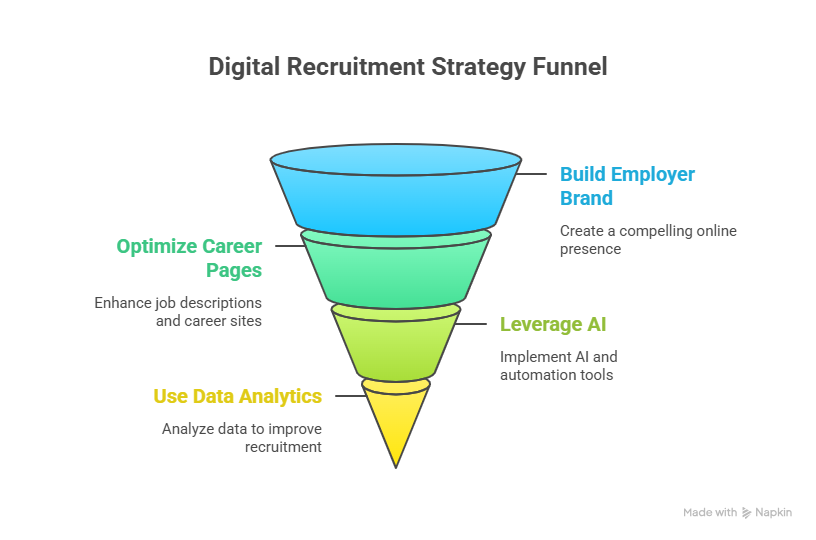
A digital recruitment strategy is more than just posting job listings online, it is a deeply comprehensive approach that integrates technology, branding, and analytics to create a seamless talent acquisition framework. Here are key steps to building an impactful strategy:
Define Recruitment Objectives
Every recruitment campaign should start with a clear set of objectives. Whether your goal is to improve time-to-hire, reduce recruitment costs, or enhance candidate experience, defining measurable outcomes helps determine the right tools and platforms to use.
Develop A Strong Employer Brand Online
In digital hiring, employer branding is the cornerstone of attracting quality talent. Organizations must actively promote their culture, mission, and values on online platforms. This can be achieved by publishing authentic employee stories, sharing company milestones, and highlighting diversity and inclusion initiatives. An engaging employer brand not only attracts candidates but also builds long-term trust.
Optimize Career Pages And Job Descriptions
Your company’s career page acts as the digital front door for potential employees. An effective page should feature well-structured job postings, a simple application process, and detailed insights into company culture. Use keyword-rich, SEO-optimized job descriptions to ensure your listings reach the right audience. Additionally, ensure mobile compatibility, as over 60% of candidates now apply for jobs via smartphones.
Leverage AI And Automation
AI-powered recruitment tools have revolutionized candidate sourcing and screening. Automated chatbots can instantly respond to candidate queries, schedule interviews, and send follow-up emails. Machine learning algorithms can analyze applications to shortlist the most relevant candidates, minimizing human bias and saving recruiters valuable time.
Use Data Analytics For Recruitment Optimization
Data analytics plays a crucial role in refining recruitment strategies. HR teams can track metrics such as candidate engagement rate, cost-per-hire, and offer acceptance ratio to identify areas of improvement. Real-time analytics also provide insights into which platforms yield the best candidates, helping teams optimize marketing spend and outreach strategies.
Digital Recruitment Strategies For Attracting Millennials And Gen Z
Millennials and Gen Z now make up the majority of the global workforce, and their expectations from employers are distinctly digital. They seek organizations that demonstrate transparency, purpose, and flexibility. Digital recruitment strategies that cater to these values can help companies connect with younger job seekers more effectively.
Social media platforms like LinkedIn, Instagram, and even TikTok serve as key recruitment touchpoints for these generations. Sharing authentic, visually engaging content, such as office tours, employee spotlights, and live Q&A sessions, can significantly enhance engagement. Additionally, incorporating gamified assessments and virtual job fairs creates interactive candidate experiences that resonate with tech-savvy applicants.
Mobile-first applications are another essential element, as younger candidates expect the ability to apply quickly using smartphones. Digital recruitment platforms with instant feedback mechanisms also help improve candidate satisfaction and strengthen brand reputation.
Digital Recruitment Tools and Techniques That Drive Results
Digital recruitment strategies succeed when the right tools are applied at the right stage of the hiring lifecycle. Across the reference materials you shared, one theme is consistent: high-performing hiring teams rely on a clearly defined recruitment technology stack rather than isolated platforms. Each tool plays a specific role, from attraction and sourcing to assessment, decision-making, and onboarding.
Below is a detailed breakdown of the most widely used digital recruitment tools, with real examples recruiters actively rely on.
Skills-Based Candidate Assessment and Screening Tools
Skills-driven and not intuition driven hiring. Modern workplaces require teams that have skills and competencies relevant to the roles they are expected to perform. For building such a workforce, you need skills-based hiring tools that ensure fair candidate assessments and screening. Skillrobo sits at the evaluation core of modern digital recruitment. It enables recruiters to assess candidates based on real, job-relevant skills instead of inferred qualifications from resumes.
Hiring teams use Skillrobo to conduct aptitude tests, technical assessments, and role-specific evaluations early in the recruitment process. This is especially effective for remote roles, internships, contract hiring, and high-volume recruitment, where resume-based screening often leads to misalignment.
By introducing objective skill validation at the top of the funnel, Skillrobo helps reduce bias, improve shortlisting accuracy, and speed up hiring decisions without compromising quality.
Applicant Tracking Systems for Hiring Workflow Management
Applicant tracking systems are consistently referenced as foundational tools in digital recruitment strategies. These platforms centralize candidate data, manage hiring stages, and streamline recruiter collaboration.
Commonly used tools include
• Greenhouse
• Lever
• Workable
• Breezy HR
These systems help standardize the digital recruitment process across full-time, part-time, contract, and internship hiring while ensuring transparency and compliance.
Candidate Relationship Management Tools for Talent Nurturing
Several reference sources highlight the importance of maintaining long-term candidate relationships rather than hiring reactively. Candidate relationship management tools allow recruiters to build talent pools and engage candidates over time.
Common CRM tools used in recruitment include
• Beamery
• Avature
• SmartRecruiters
These platforms are especially valuable for recurring roles, leadership pipelines, and workforce planning initiatives.
Candidate Sourcing and Talent Discovery Platforms
Digital recruitment strategies increasingly depend on proactive sourcing rather than waiting for applications. Sourcing tools help recruiters identify and engage passive candidates across multiple channels.
Widely used sourcing platforms include
• LinkedIn Recruiter
• Indeed
• Monster
• HireEZ
These tools support digital recruitment strategies that remote teams use to access global talent pools.
Programmatic Job Advertising and Job Distribution Tools
The reference articles repeatedly mention programmatic job advertising as a key driver of reach and efficiency. These tools automatically distribute job postings based on performance and audience behavior.
Common platforms include
• Appcast
• PandoLogic
• Joveo
These tools are particularly effective during time-sensitive hiring periods, such as last-month recruitment pushes.
Employer Branding and Career Site Platforms
Employer branding tools shape how candidates perceive an organization before they apply. The references emphasize career site optimization as a critical element of digital recruitment strategy.
Popular tools include
• Phenom
• SmashFly
• Radancy
These platforms help improve application quality by attracting candidates aligned with the company values and culture.
Video Interviewing and Digital Screening Tools
Video-based hiring tools are now standard across modern recruitment strategies in the digital age. They reduce scheduling delays and enable structured candidate evaluation.
Commonly used tools include
• HireVue
• Spark Hire
• Willo
These tools are widely used for early-stage screening, remote hiring, and graduate recruitment programs.
Behavioral and Cognitive Assessment Platforms
Beyond skills testing, many organizations use tools that assess behavioral traits and cognitive ability to predict job performance.
Frequently referenced platforms include
• Pymetrics
• SHL
• Criteria
These tools complement skill-based assessments and support more informed hiring decisions.
Recruitment Automation and Workflow Tools
Automation tools remove friction from repetitive recruitment tasks, improving recruiter productivity and candidate experience.
Common tools include
• Zapier
• Cflow
These platforms are used to automate interview scheduling, approvals, notifications, and documentation workflows.
Recruitment Analytics and Talent Intelligence Tools
Data-driven recruitment is a recurring theme across all reference links. Analytics tools help organizations measure hiring effectiveness and refine strategies.
Popular tools include
• LinkedIn Talent Insights
• Tableau
• Power BI
These tools support evidence-based recruitment decisions and long-term workforce planning.
Digital Onboarding and Preboarding Platforms
The digital recruitment process extends beyond hiring. Onboarding tools ensure a smooth transition from candidate to employee.
Commonly used platforms include
• Sapling
• Enboarder
Strong onboarding reinforces employer credibility and reduces early attrition.
The Role Of Employer Branding In Digital Recruitment
Employer branding defines how candidates perceive your organization, and in digital recruitment, it can be the determining factor for top talent choosing your company over competitors. A strong employer brand builds credibility, inspires trust, and showcases the organization’s culture and values.
Companies can leverage storytelling to humanize their brand by sharing authentic employee experiences, leadership insights, and social impact initiatives. Visual content, including short videos and graphics, can effectively communicate company values and work-life balance.
An active presence across platforms like LinkedIn, Glassdoor, and YouTube allows organizations to engage directly with job seekers, address their queries, and highlight company achievements. Consistent branding across channels strengthens reputation and builds a sense of belonging even before candidates join.
How AI And Automation Are Transforming Digital Recruitment
Artificial intelligence and automation have fundamentally reshaped the recruitment landscape. AI-driven algorithms analyze massive datasets to identify candidate patterns and predict job fit. Automation eliminates repetitive tasks, freeing recruiters to focus on human-centric aspects like relationship building and cultural evaluation.
Chatbots, for instance, can handle initial candidate interactions 24/7, answer FAQs, and even schedule interviews. Predictive analytics tools help forecast future hiring needs, enabling strategic workforce planning. Additionally, AI-based resume parsing ensures faster and more objective candidate shortlisting.
As automation reduces administrative workload, recruiters gain more time to engage meaningfully with candidates, ultimately leading to better hiring outcomes and stronger retention.
Digital Recruitment Strategies for Different Hiring Models
Strategies for Remote Hiring
Digital recruitment strategies remote teams rely on global sourcing, virtual assessments, and asynchronous interviews. Employers focus on skills, communication ability, and cultural alignment rather than location.
Strategies for Full Time Roles
For full-time hiring, organizations emphasize employer branding, career growth narratives, and long-term value alignment. Data from past hiring cycles informs role prioritization and sourcing channels.
Strategies for Part Time and Contract Roles
Digital recruitment strategies part time and contract hiring focus on speed and flexibility. Talent pools, automation, and pre-vetted candidates help reduce time-to-fill while maintaining quality.
Strategies for Internship Programs
Digital recruitment strategies internship hiring centers on campus outreach, social platforms, and early engagement. Simplified applications and digital assessments help attract emerging talent.
Strategies for Last Month Hiring Surges
When hiring needs spike in the last month of a quarter or fiscal year, digital recruitment strategy ensures scalability through automation, pre-built workflows, and real-time analytics.
Digital Recruitment Strategies for 2026
Digital recruitment in 2026 will be shaped by how quickly organizations can adapt to shifting talent expectations, evolving technology, and unpredictable workforce demands. The focus will move away from reactive hiring toward building resilient, always-on recruitment ecosystems that balance speed, quality, and trust.
From Campaign-Based Hiring to Continuous Talent Pipelines
Recruitment strategies in 2026 will no longer revolve around opening roles and closing them one by one. Organizations will invest in continuous talent pipelines where potential candidates are engaged long before a vacancy exists. This approach allows hiring teams to respond faster to sudden demand, reduce dependency on job boards, and maintain hiring momentum during peak periods.
Talent communities, alumni networks, and internal mobility pools will play a central role. Recruiters will shift from short-term sourcing to long-term relationship building, ensuring a steady flow of qualified candidates across full-time, part-time, contract, and internship roles.
Predictive Hiring and Workforce Forecasting
Hiring decisions in 2026 will be increasingly informed by predictive insights rather than historical data alone. Recruitment teams will use workforce analytics to anticipate skill shortages, seasonal hiring spikes, and attrition trends before they impact operations.
Instead of reacting to urgent hiring needs in the last month of a quarter or financial year, organizations will forecast demand and activate hiring workflows in advance. This proactive approach reduces time pressure, improves candidate quality, and allows better alignment with business growth plans.
Skills-Based Hiring Over Role-Based Hiring
Job titles will matter less in 2026 than demonstrated capabilities. Recruitment strategies will prioritize skills, adaptability, and learning potential over linear career paths. This shift will open access to wider talent pools, including candidates transitioning careers or returning to the workforce.
Assessments will focus on practical problem-solving, communication ability, and role-specific competencies. For remote hiring, this skills-first approach will help organizations evaluate candidates objectively without relying on location or traditional credentials.
Experience-First Candidate Journeys
Candidate experience will become a key differentiator in competitive hiring markets. In 2026, recruitment strategies will emphasize clarity, transparency, and responsiveness at every stage of the hiring process.
Applicants will expect simple applications, clear timelines, and consistent communication. Automated updates and self-service scheduling will reduce uncertainty, while structured interviews and feedback loops will build trust. Organizations that fail to deliver a respectful and engaging experience risk losing top talent early in the process.
Intelligent Automation With Human Oversight
Automation will be deeply embedded in recruitment workflows by 2026, but with a stronger emphasis on human control and accountability. Technology will handle repetitive tasks such as screening, scheduling, and documentation, allowing recruiters to focus on relationship building and decision-making.
At the same time, organizations will establish clear guidelines to ensure automation supports fairness rather than replacing judgment. Recruiters will remain responsible for final evaluations, cultural alignment, and complex hiring decisions, especially for leadership and high-impact roles.
Data-Driven Optimization of Recruitment Channels
Recruitment teams in 2026 will continuously evaluate which sourcing channels deliver the best results. Instead of spreading effort across every platform, organizations will concentrate on channels that consistently produce high-quality candidates.
Real-time performance tracking will help teams refine messaging, adjust outreach strategies, and improve conversion rates across different hiring models. This data-driven approach will also support better budget allocation and reduce wasted recruitment spend.
Global and Remote-Ready Hiring Models
Remote and hybrid work will remain standard rather than optional in 2026. Recruitment strategies will be designed to support global talent sourcing while addressing compliance, time zone coordination, and cultural alignment.
Hiring teams will standardize virtual interviews, digital assessments, and remote onboarding processes. Clear documentation and workflow consistency will ensure that candidates have the same experience regardless of location, while managers gain visibility into distributed hiring efforts.
Ethical, Inclusive, and Transparent Hiring Practices
Trust will be a defining factor in recruitment strategies for 2026. Candidates will expect transparency in how hiring decisions are made, how data is used, and how assessments are evaluated.
Organizations will place greater emphasis on inclusive hiring practices, ensuring accessibility and fairness across digital hiring systems. Clear communication about evaluation criteria and decision timelines will help build credibility and long-term employer reputation.
Strong Alignment Between Recruitment and Business Strategy
Recruitment in 2026 will be tightly aligned with business goals rather than operating as a support function. Hiring teams will collaborate closely with leadership to understand growth priorities, workforce risks, and future skill needs.
This alignment will enable recruitment strategies to support expansion, innovation, and operational stability. Instead of filling roles in isolation, recruitment will become a strategic driver of organizational success.
Hiring in the Digital Era Is a Strategy, Not a Tactic
Digital recruitment strategies have transformed how organizations find, engage, and hire talent in an increasingly competitive market. By understanding what are the different recruitment strategies, investing in the right digital recruitment tools and techniques, and aligning hiring with long-term business goals, companies can build a sustainable recruitment engine. Whether hiring for remote roles, internships, contract positions, or full-time teams, a thoughtful digital recruitment strategy ensures consistency, speed, and quality. As hiring continues to evolve, organizations that embrace modern recruitment strategies in the digital age will stay ahead of talent demands and market change.