Training Needs Analysis: A Strategic Blueprint for Workforce Growth
Key Takeaways
- A training needs analysis bridges the gap between current employee skills and future business goals.
- Using a training needs analysis template helps standardize data collection and streamline planning.
- Effective training needs assessment analysis improves ROI by aligning learning objectives with business performance.
- Understanding how to conduct a training needs analysis ensures focused, role-based development.
- Digital tools simplify identifying and addressing employee training needs and analysis across departments.
Why Training Needs Analysis Matters
Upskilling is no longer optional, it’s a strategic necessity. But without clarity on what to train and who needs it, organizations risk wasting resources on generalized programs. This is where a well-structured training needs analysis (TNA) becomes vital. It helps businesses understand workforce capability and skill gaps, align employee talent development with organizational objectives, and stay competitive in a rapidly changing market.
In this blog, we break down what a training needs analysis is, how to conduct one effectively, the tools you need, and why it’s the foundation of impactful learning strategies.
What is Training Needs Analysis?
A training needs analysis is the structured process of identifying the skills, knowledge, and behavioral gaps between an employee’s current performance and the competencies required for their role. It’s often the first and most critical step in any learning and development strategy.
Whereas traditional training often operates on assumptions, a TNA uses data to pinpoint who needs training, what kind they need, and how it should be delivered. It includes analyzing individual, team, and organizational needs.
For example, an organization implementing new project management software might use a training needs analysis template to assess digital proficiency gaps across teams.
According to AIHR, companies that perform routine training needs assessments are 70% more likely to report improved business outcomes (AIHR).
Benefits of Training Needs Analysis
A structured training needs analysis is more than a checklist, it’s a strategic lens through which organizations can evaluate current capabilities and align training with real business priorities. When done right, TNA not only saves time and money but also strengthens employee performance and retention. It complements broader skill assessment strategies by offering role-based, data-driven insights into learning needs.
Here’s how it delivers measurable value:
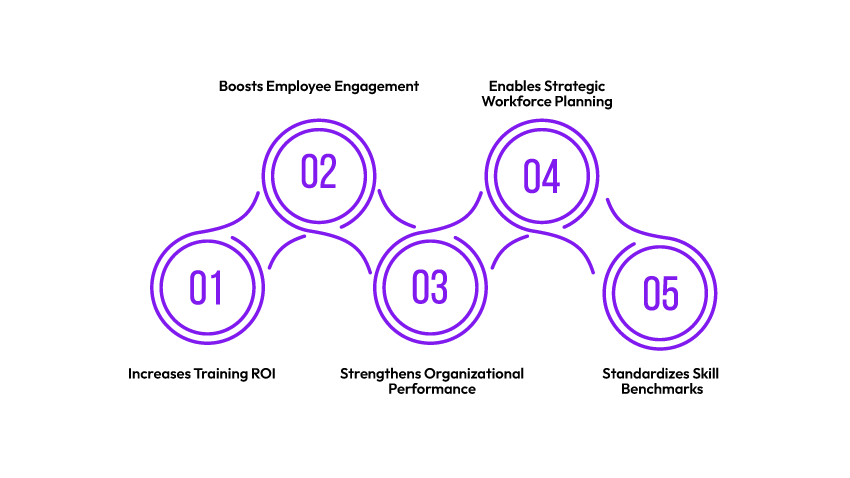
1. Increases Training ROI
By targeting specific skill gaps, companies ensure that every training dollar is directed where it’s most needed. Instead of one-size-fits-all programs, employees receive the training that directly impacts their job performance, leading to faster upskilling and measurable ROI. Using customized employee skill assessment strategies enhances the precision of this targeting.
2. Boosts Employee Engagement
Employees are more likely to engage with training when it’s relevant and personalized. A data-backed TNA helps tailor learning interventions that resonate with individual growth goals. When people feel their development matters, motivation and retention both improve.
3. Strengthens Organizational Performance
Skill gaps often lead to inefficiencies, mistakes, or missed opportunities. By identifying and addressing those gaps proactively, teams perform at a higher level, avoid costly errors, and consistently meet performance goals. Regular skill assessment integrated into TNA ensures these gaps are continuously monitored.
4. Enables Strategic Workforce Planning
A forward-looking TNA doesn’t just fix current weaknesses, it equips organizations to meet future demands. By forecasting evolving skill requirements, HR teams can proactively plan for hiring, internal talent mobility, or reskilling initiatives. Leveraging online employee skill assessment tools helps ensure that workforce planning is based on real-time capability data, not assumptions.
5. Standardizes Skill Benchmarks
With a clear framework and consistent evaluation methods, TNA allows companies to benchmark employee skills across roles, teams, and locations. This makes training more equitable, transparent, and aligned with performance standards company-wide.
Key Components of a Training Needs Analysis
An effective training needs analysis isn’t just about identifying who needs training—it’s about building a comprehensive framework that ties employee development directly to business objectives. This requires analyzing needs at multiple levels: organizational, task-based, and individual. The strength of a TNA lies in its structure, each component ensures training is targeted, measurable, and aligned with long-term goals.
Here’s a closer look at the five core components:
1. Organizational Analysis
This step examines the company’s strategic direction and identifies which capabilities are required to achieve its objectives. Whether the focus is digital transformation, customer service excellence, or compliance, this analysis highlights overarching skill needs. For instance, if a business plans to expand globally, an organizational analysis might reveal the need for multilingual communication training. Employee skills assessment helps validate whether current capabilities support these strategic priorities.
2. Task or Role Analysis
This involves breaking down specific job roles into core tasks and mapping the competencies needed for each. It clarifies what employees should be able to do in their roles, which becomes the benchmark for performance and training design. Using role-based assessment tools allows HR teams to link role requirements directly to learning objectives.
3. Individual Analysis
Here, current employee performance is evaluated through feedback, peer reviews, and assessment data. The goal is to determine who needs training, in what area, and why. This layer of analysis ensures that interventions are not just relevant, but personalized.
4. Gap Identification
This is the core diagnostic step. By comparing expected performance against actual outcomes, HR can pinpoint specific skill or knowledge gaps. These findings inform both short-term training needs and long-term learning paths.
5. Prioritization and Planning
Once gaps are identified, they must be ranked based on impact and urgency. Prioritizing high-risk or high-impact areas ensures that training budgets and time are used where they’ll deliver the most value. This planning phase also helps balance quick wins with strategic development goals.
How to Conduct a Training Needs Analysis
Executing a successful training needs analysis requires more than simply spotting performance gaps. It calls for a structured, systematic approach that ties employee capabilities directly to organizational objectives. A well-executed analysis helps leaders understand not just what employees need to improve, but why those improvements matter to the company’s growth trajectory.
Whether you are launching a new learning program or refining an existing initiative, each step plays a vital role in turning observations into strategic action. The process outlined below provides a roadmap for conducting a training needs analysis that strengthens workforce performance and delivers measurable business results.
Step 1: Define Business Objectives
Begin the process by grounding the analysis in the company’s broader goals. Whether the organization is expanding into a new market, rolling out a new technology, improving compliance, or increasing operational efficiency, the training strategy must directly support these initiatives. Aligning the TNA with business objectives ensures that training investments address actual priorities rather than assumptions. This clarity helps leaders determine what competencies are mission-critical and what skill improvements will contribute most to strategic outcomes.
Step 2: Identify Key Roles and Competencies
Once the business objectives are defined, identify the roles that are essential to achieving them. Map out the technical, behavioral, and soft skills required for each position, ensuring these competencies reflect current and emerging job expectations. Tools such as competency mapping frameworks or digital skill profiling platforms can help standardize and document these requirements across departments. A clear competency structure allows organizations to make accurate comparisons between expected performance and actual capability, making the analysis stronger and more actionable.
Step 3: Collect Performance Data
Collecting accurate performance data is crucial to understanding the current state of employee proficiency. Use a combination of performance reviews, self-evaluations, 360° feedback, skill tests, interviews, and employee surveys to create a complete picture. This step helps uncover patterns, recurring challenges, and skill gaps across individuals or teams. Leveraging online skill assessment tools enhances this phase by offering real-time reporting, automated scoring, and digital objectivity, which significantly increases data accuracy and reduces manual analysis time. Incorporating online employee skill assessment tools can streamline this phase with digital accuracy.
Step 4: Use a Training Needs Analysis Template
A standardized training needs analysis template helps organize information consistently across teams and departments. This template typically captures details such as required skills, current proficiency levels, performance gaps, available training resources, preferred learning formats, and urgency indicators. Using a template streamlines documentation, simplifies comparison across diverse roles, and ensures that nothing critical is overlooked during the evaluation. It also becomes a reliable reference point when presenting insights to leadership or L&D teams.
Step 5: Analyze and Prioritize Gaps
After gathering and documenting all relevant data, analyze the results to determine which gaps have the highest impact on performance and organizational goals. Not all deficiencies carry the same weight. Prioritize based on urgency, business risk, operational value, and the potential consequences of leaving the gap unaddressed. Skills related to safety, regulatory compliance, customer satisfaction, and productivity often require immediate intervention. A structured prioritization process ensures resources are allocated where they can make the greatest impact.
Step 6: Recommend Training Interventions
Once skill gaps are prioritized, outline training interventions that best suit the needs of the workforce. Recommendations may include instructor-led workshops, online learning modules, microlearning assets, coaching programs, mentoring, or blended learning models. The format should match the learner’s environment, the complexity of the skill, and the level of hands-on practice required. This step transforms analysis into actionable plans that directly enhance capabilities and drive measurable performance improvements.
Real-World Use Cases
1. Salesforce Implementation in a Retail Chain
A national retail chain preparing for a full Salesforce rollout conducted a training needs analysis to evaluate frontline and back-office CRM readiness. Assessment data revealed that 63 percent of employees lacked foundational Salesforce navigation skills and required targeted onboarding before deployment. The insights helped the company design a structured CRM training pathway, reducing rollout delays and increasing tool adoption across all store locations.
2. Healthcare Compliance Training
A major hospital system used training needs and analysis data to uncover inconsistent HIPAA compliance practices among administrative and clinical staff. Through surveys, skill tests, and performance audits, the organization identified specific areas where employees misunderstood confidentiality protocols. To address these gaps, leadership introduced short, scenario-based microlearning modules that reinforced critical compliance behaviors. This targeted approach led to higher audit scores and fewer operational risks.
3. Manufacturing Safety Readiness
Following a safety incident, a manufacturing company conducted a thorough training needs analysis focused on lockout-tagout procedures. The assessment highlighted inconsistent adherence to safety steps and gaps in hazard identification skills among machine operators. With this information, the company launched a mandatory training program that combined hands-on demonstrations, safety simulations, and refresher quizzes. Within months, violations dropped by nearly 40 percent, demonstrating the impact of a data-driven training approach.
Skillrobo for Managing Training Needs
Skillrobo is a powerful, no-code platform designed to simplify and scale your training needs analysis process. With its suite of automated assessment tools and customizable templates, Skillrobo enables HR teams to evaluate employee skills, track training gaps, and generate actionable insights, all in one place.
Here’s how Skillrobo supports training needs assessment and analysis:
- Custom Skill Assessments
Design and deploy tailored evaluations to measure role-specific competencies across teams and departments. - Pre-Built Templates for TNA
Use ready-to-go training needs analysis templates to standardize evaluations and simplify implementation. - Automated Reporting Dashboards
Visualize assessment outcomes by individual, team, or role, helping you identify patterns and high-priority gaps. - Adaptive Testing Engine
Deliver personalized assessments that adjust question difficulty based on the employee’s response—ideal for evaluating both foundational and advanced skills. - Soft Skill & Technical Evaluation
Assess both technical capabilities and behavioral traits essential to job success. - Role-Based Skill Mapping
Match existing employee skills to defined role requirements for efficient gap analysis. - Integration with Training Plans
Align assessment results directly with L&D workflows, enabling faster training interventions.
Why Choose Skillrobo?
- Speeds up skill gap analysis with automated scoring
- Supports both technical and soft skill evaluation
- Enables data-driven training recommendations at scale
Skillrobo helps organizations move beyond guesswork, enabling precise, scalable, and efficient training needs analysis that drives real performance improvement.
Conclusion
A thoughtful training needs analysis is the foundation of impactful employee talent development. It enables HR and L&D teams to identify skill gaps, allocate training resources efficiently, and ensure learning initiatives align with business priorities. Whether you’re onboarding new tools, addressing performance gaps, or preparing for future growth, TNA gives you the insights needed to act with purpose.
Ready to make training decisions backed by data? Sign up for Skillrobo and simplify your training needs analysis from day one.
Frequently Asked Questions
1. What is training needs analysis, and why is it important?
It is a structured method of identifying skill gaps in employees to align training with business goals. It improves training effectiveness, enhances learning ROI, and ensures workforce development strategies are tailored to real organizational needs.
2. How to conduct a training needs analysis in a company?
Define organizational objectives, assess current employee performance, identify skill gaps using assessment tools and templates, and create a targeted, data-driven training plan aligned with both individual and team development goals.
3. What tools help with employee training needs and analysis?
Tools like Skillrobo support automated workflows, skill surveys, manager feedback collection, and real-time dashboard reporting, making it easier to evaluate, prioritize, and close skill gaps at scale.