Data-Driven Hiring Using Online Talent Assessment Tools
Key Takeaways
- Online talent assessment tools use measurable data to predict job success and improve hiring accuracy across industries.
- A data-driven hiring approach reduces bias by replacing gut decisions with objective skill assessments and analytics.
- Predictive analytics accelerates decision-making, lowers time-to-hire, and enhances overall recruitment efficiency.
- Skillrobo enables structured, role-specific hiring through customizable tests, AI-driven question generation, and instant reports.
What is Data Driven Hiring?
Data-driven hiring refers to the hiring approach that is driven by data insights on candidate skills and competencies. Hiring teams can gain data insights by using online talent assessment tools. As opposed to traditional hiring that is focused on resumes or interviews, data-driven recruiting is focused on pre-employment assessment scores. Traditional hiring methods, namely resumes, interviews, and gut instinct, often lead to inconsistent and biased decisions. While experience and intuition have their place, they don’t always provide a complete or reliable view of a candidate’s potential. Hence, data-driven hiring using online talent assessment tools has become the norm.
As businesses face growing pressure to hire faster and smarter, there’s a clear shift toward objective evaluation. This means relying on measurable data, like skill assessments and structured test results, rather than assumptions. Skill assessments and structured talent assessment processes are replacing assumptions
How to use data for recruiting? Online talent assessment tools now play a critical role in this transition, helping recruiters identify top talent based on performance, not perception to make data-driven hiring decisions. We’ll explore how to adopt data-driven recruitment strategies and understand the key methods, benefits, and data driven recruitment examples that enable objective, skill-based candidate evaluation in this blog.
Understanding Data-Driven Hiring
Data-driven hiring means using quantifiable insights, such as test scores, behavioral indicators, and skill evaluations, to select the best-fit candidates. It emphasizes measurable performance over assumptions, bringing consistency and fairness into recruitment.
This approach uses structured assessments, analytics, and benchmarking to evaluate how well a candidate matches the demands of a role. It moves beyond what a resume claims and focuses on how a candidate performs in relevant tasks.
According to HRWorld, companies applying predictive analytics to hiring processes are seeing stronger outcomes, including better job fit and higher retention.
What Are the Principles of Data-Driven Hiring?
Data-driven hiring is guided by a clear set of principles that shift recruitment from intuition-led decisions to evidence-based outcomes. These principles ensure that hiring decisions are consistent, defensible, and closely aligned with real job performance. When applied correctly, they help organizations hire faster, reduce bias, and continuously improve hiring quality using measurable insights rather than assumptions.
Objectivity Over Intuition
At the core of data-driven hiring is the commitment to objectivity. Instead of relying on gut feelings, first impressions, or resume aesthetics, recruiters use quantifiable data such as assessment scores, structured interview ratings, and historical hiring outcomes. This approach minimizes inconsistencies between hiring managers and ensures that decisions are based on what candidates can actually do rather than how confidently they present themselves. Over time, objectivity improves trust in the hiring process and creates repeatable success across roles.
Focus on Job-Relevant and Predictive Data
Not all data is equally valuable in hiring. A key principle of data-driven hiring is prioritizing data that directly correlates with on-the-job performance. This includes role-specific skills, problem-solving ability, behavioral indicators, and situational judgment results. By filtering out weak or irrelevant signals, such as brand-name institutions or years of experience alone, recruiters gain a clearer picture of a candidate’s ability to succeed in the role. Predictive data ensures that hiring decisions are forward-looking rather than based on past credentials alone.
Standardization and Consistency in Evaluation
Standardization ensures that every candidate is assessed using the same criteria, tools, and scoring models. This principle is essential for fairness and comparability. Whether it is skill assessments, interviews, or evaluations, a standardized framework eliminates variability caused by personal interpretation. Consistency also makes it easier to compare candidates objectively, audit hiring decisions, and demonstrate compliance with fair hiring practices.
Transparency and Bias Reduction
Data-driven hiring emphasizes transparency at every stage of recruitment. When hiring decisions are backed by clear metrics, documented scores, and structured evaluations, unconscious bias has less room to influence outcomes. Transparent processes make it easier to explain why certain candidates progressed while others did not, which strengthens both candidate trust and internal accountability. This principle also supports diversity and inclusion efforts by ensuring decisions are based on ability rather than background.
Continuous Measurement and Feedback Loops
Another defining principle of data-driven hiring is continuous measurement. Hiring does not end once a candidate is onboarded. Organizations track post-hire performance, retention, and engagement to understand which hiring indicators truly predict success. These insights feed back into the recruitment process, allowing teams to refine assessments, update benchmarks, and improve role definitions. Continuous feedback loops ensure the hiring process evolves with changing business needs.
Scalability and Repeatability
Data-driven hiring is designed to scale without sacrificing quality. By relying on automated assessments, standardized scoring, and analytics, organizations can handle higher candidate volumes while maintaining consistency. This principle is especially important for fast-growing teams where manual screening becomes inefficient and error-prone. A scalable data-backed process allows recruiters to maintain speed and accuracy even as hiring demands increase.
Ethical and Responsible Use of Data
An often overlooked but critical principle is ethical data usage. Data-driven hiring requires responsible handling of candidate data, clear consent, and secure storage. Recruiters must ensure that data is used only for relevant hiring decisions and that assessment criteria are fair, explainable, and legally compliant. Ethical use of data builds candidate confidence and protects organizational credibility.
Together, these principles form the foundation of effective data-driven hiring. When applied consistently, they transform recruitment into a structured, performance-focused process that delivers better hires, reduces risk, and supports long-term workforce success.
How Online Talent Assessment Tools Enable Smarter Hiring
Online assessment platforms are at the core of a data-first hiring strategy. These tools help recruiters evaluate candidates across technical, cognitive, and soft skills using standardized, role-specific tests. By doing so, they eliminate guesswork and ensure that only qualified candidates move forward. Modern candidate assessment tools not only measure skillsets but also support automated shortlisting and benchmarking across departments.
Such platforms allow organizations to structure their hiring process around measurable data instead of relying on resumes or subjective impressions. Recruiters can compare applicants side by side based on performance, making selection more transparent and repeatable.
Insights from HiringBranch and PMAPS show that companies using structured assessments experience faster hiring cycles, reduced screening time, and stronger candidate-job alignment.
Moreover, these tools often integrate with applicant tracking systems and career portals, making them easy to scale across multiple roles and departments. Platforms that deliver standardized pre-employment tests help reduce screening time and increase the quality of hire.
What are the Benefits of Data-Driven Hiring?
Adopting a data-driven hiring approach does more than just streamline recruitment, it transforms it into a structured, evidence-based process. By prioritizing measurable performance and predictive insights, organizations can significantly reduce hiring risks and improve workforce quality.
Beyond improving accuracy, data-backed hiring brings scalability, transparency, and consistency across all stages of recruitment, from initial screening to final selection. The following benefits highlight why more companies are moving away from intuition-led hiring toward performance-driven evaluations.
1. Better Hiring Accuracy
When candidates are assessed through structured tests and analytics, hiring managers can make decisions based on proven capabilities. This leads to stronger hires who are better aligned with the job requirements.
It minimizes reliance on superficial indicators like resumes and helps identify top performers early in the funnel. Over time, this enhances team productivity and reduces the cost of bad hires. Structured pre-employment assessment tests ensure candidates are judged based on proven ability rather than unverified resumes.
2. Reduced Bias and Subjectivity
Objective assessments remove many of the unconscious biases that can affect decisions based on names, educational background, or appearance. Data ensures fairness in evaluating all candidates on equal grounds.
This leads to a more inclusive hiring process, promoting diversity and equity in recruitment. It also helps companies meet internal and external compliance expectations related to fair hiring practices.
3. Faster Decision-Making
With instant scoring and automated shortlisting, recruiters spend less time on manual resume reviews. This accelerates time-to-hire and allows HR teams to focus on high-impact tasks like interviews and onboarding.
Faster turnaround times also reduce the risk of losing top talent to competitors, giving companies a competitive edge in tight labor markets.
4. Improved Candidate Experience
Fair, role-relevant assessments demonstrate that a company values skill over background. Candidates appreciate the clarity and transparency that structured evaluations bring to the hiring process.
This creates a more engaging and respectful experience, improving employer branding and increasing the likelihood of candidates recommending the organization, even if they’re not hired.
5. Higher Offer Acceptance and Retention Rates
When candidates are placed in roles suited to their skills and potential, they’re more likely to accept offers and stay engaged long-term. Data alignment reduces mismatches and post-hire regret for both parties.
It also helps build more motivated teams and reduces early attrition, leading to better workforce stability and long-term performance. Better alignment through assessments strengthens both hiring and long-term talent management strategies.
What are the Recruitment Metrics in Data-Driven Hiring?
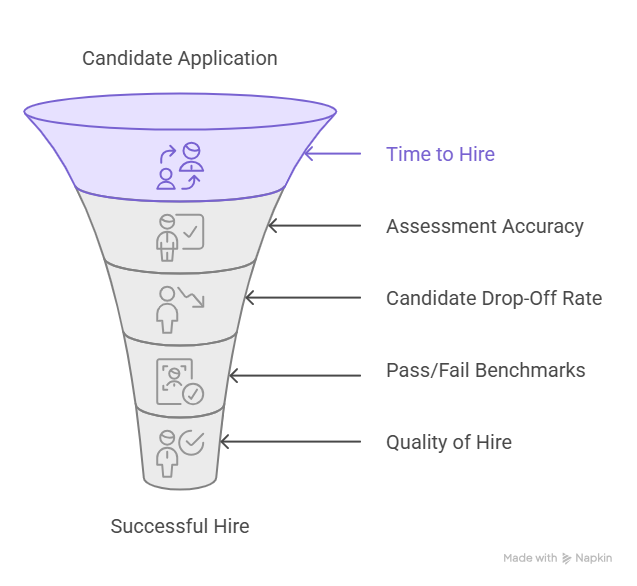
Data-driven hiring isn’t just about using assessments, it’s about continuously measuring and improving the effectiveness of your recruitment process. The right metrics give hiring teams a clear view of what’s working, where bottlenecks exist, and how closely hiring decisions align with organizational goals.
By tracking and analyzing key recruitment metrics, companies can make informed adjustments to their hiring strategy, ensuring better outcomes over time. Here are some of the most important data points to focus on:
1. Time to Hire
This metric measures how long it takes to move a candidate from application to offer acceptance. A shorter time to hire often indicates an efficient and streamlined process, which is crucial in competitive job markets.
2. Assessment Accuracy
Evaluates how well assessment results predict job performance. The closer the correlation, the more effective your tests are in identifying high-potential candidates. Regular validation helps keep assessments aligned with real-world role expectations.
3. Candidate Drop-Off Rate
Tracks how many candidates abandon the process mid-way. High drop-off rates may signal that tests are too long, confusing, or poorly designed. Monitoring this helps improve the candidate experience and increase completion rates.
4. Pass/Fail Benchmarks
These benchmarks reflect how candidates are performing against pre-set scoring thresholds. They help recruiters identify top-tier applicants faster and ensure consistency in shortlisting across different hiring cycles. Many teams integrate employee evaluation software to align hiring decisions with long-term performance reviews and development goals.
5. Quality of Hire
One of the most valuable metrics it links hiring decisions to post-hire performance. Quality of hire is typically measured through feedback from managers, performance reviews, or retention within the first 6–12 months.
What are the Challenges in Adopting Data-Driven Hiring?
While the benefits of data-driven hiring are well-established, many organizations still face practical barriers that delay or limit adoption. Transitioning from traditional hiring practices to a data-centric model requires not only new tools but also a mindset shift across HR and leadership teams.
Some of the common challenges include:
1. Lack of Digital Infrastructure in HR Teams
Many organizations still rely on manual or semi-automated systems that aren’t built to support data-centric processes. Without a robust digital infrastructure, integrating online assessments and tracking analytics can be difficult and resource-intensive.
2. Concerns About Candidate Data Privacy
Collecting, storing, and analyzing candidate data raises valid privacy and compliance concerns. Companies must ensure that their hiring platforms comply with data protection regulations such as GDPR and maintain transparency with candidates about how their data is used.
3. Change Resistance from Hiring Managers
Hiring managers who are used to traditional methods, like unstructured interviews or resume filtering, may be skeptical of automated or data-based evaluations. Resistance can stem from a lack of understanding or fear of losing control over the decision-making process.
These challenges, however, are not insurmountable. They can be mitigated by selecting secure and intuitive hiring tools that offer role-based access, audit trails, and easy integration with existing HR systems. Training, internal communication, and gradual implementation also help build trust and promote adoption across teams.
How to Build an Ideal Data-Backed Hiring Workflow
An ideal data-backed hiring workflow is designed to remove guesswork from recruitment while keeping the process practical and scalable. Instead of relying on resumes alone or subjective interview impressions, this approach uses measurable inputs at every stage to guide decisions. When implemented correctly, it helps recruiters focus on evidence, reduce bias, and move faster without compromising quality.
A simple five-step model forms the foundation of an effective data-driven hiring workflow.
Designing Skill-Based Assessments Tailored to Each Role
The first step is defining what success looks like for the role and translating it into measurable competencies. Skill-based assessments should reflect the actual tasks and challenges candidates will face on the job, rather than generic aptitude tests. For technical roles, this may include problem-solving or coding exercises, while non-technical roles may focus on communication, reasoning, or role-specific scenarios. Designing assessments around real job requirements ensures that the data collected is relevant, predictive, and aligned with performance expectations.
Sharing Tests via Public URLs or ATS Integration
Once assessments are ready, accessibility becomes critical. Sharing tests through public URLs or integrating them directly into an applicant tracking system removes unnecessary friction for candidates. This step ensures that candidates can complete assessments easily, regardless of location or device. Seamless distribution also helps recruiters scale hiring efforts, manage high applicant volumes, and maintain consistency across roles and hiring campaigns without manual coordination.
Monitoring Test Behavior Using Cheating Prevention Tools
Data-backed hiring relies on the integrity of the data collected. Monitoring test behavior through built-in proctoring and cheating prevention mechanisms helps maintain fairness and reliability. Features such as webcam monitoring, tab-switch detection, and time tracking discourage unethical behavior and provide visibility into how candidates approach assessments. This step ensures that hiring decisions are based on genuine skill levels rather than compromised test results.
Analyzing Reports Generated Instantly After Test Completion
After assessments are completed, structured reports provide immediate insights into candidate performance. These reports typically include scores, skill-wise breakdowns, benchmarks, and comparative analysis. Instead of manually reviewing resumes or subjective notes, recruiters can quickly evaluate candidates using standardized data points. Instant reporting accelerates shortlisting while ensuring decisions are consistent, transparent, and defensible.
Progressing Only the Most Qualified Candidates to Interviews
The final step is using assessment data to determine who advances to interviews. By setting clear benchmarks and cutoff criteria, recruiters can focus interview efforts on candidates who have already demonstrated the required skills. This reduces interview fatigue, improves interviewer efficiency, and leads to more meaningful conversations focused on role fit and potential. Interviews become a validation step rather than a discovery phase, making the entire hiring process more effective.
This structured workflow ensures consistency, fairness, and speed across the recruitment cycle. By anchoring each stage in data, organizations can make confident hiring decisions while reducing manual effort and improving overall hiring outcomes.
Skillrobo: Your Partner in Smart, Structured Hiring
Skillrobo is a powerful online assessment platform designed to enable objective, data-backed hiring decisions. Its robust features allow organizations to assess candidates efficiently and effectively, without relying on guesswork.
Why Recruiters Choose Skillrobo
- Customizable Tests: Build assessments tailored to job roles using multiple-choice, fill-in-the-blank, and descriptive formats.
- AI-Powered Test Generation: SEYARC AI creates relevant questions even for niche skills, accelerating test creation. Skillrobo’s AI talent assessment capabilities allow for rapid, accurate evaluation of even specialized skill sets.
- Cheating Prevention: Webcam monitoring, browser tab detection, and snapshot tracking ensure integrity.
- Public URL Access: Share tests easily via emails or career portals—no login required.
- Role-Based Access: Grant recruiters, managers, and stakeholders secure access to review candidate data.
- Instant Reporting: Auto-generated, categorized performance reports speed up the shortlisting process.
Skillrobo equips hiring teams with everything they need to make fast, fair, and data-informed recruitment decisions.
Conclusion
Data-driven hiring is no longer a trend, it’s a strategic necessity for organizations seeking to build stronger, more capable teams. By shifting from assumption-based decisions to structured evaluations, companies gain greater control over recruitment quality and efficiency.
Online talent assessment tools provide the foundation for this transformation, offering measurable insights that improve every stage of the hiring process from screening to final selection. When implemented correctly, data-backed hiring leads to better job fit, lower attrition, and more equitable candidate experiences.
Platforms like Skillrobo empower recruiters to take full advantage of this approach by offering customizable tests, instant reporting, AI-generated questions, and robust proctoring tools.
As hiring continues to evolve, organizations that embrace data-driven recruitment will be better positioned to attract, assess, and retain top talent with confidence and consistency. Ready to transform your hiring strategy? Sign up for Skillrobo today and start building smarter, data-driven recruitment workflows.
FAQs
What Is Data Driven Hiring?
Data driven hiring is the practice of using data, analytics, and measurable insights to make informed recruitment decisions. It relies on evidence such as skill assessments, hiring metrics, and performance data rather than intuition or subjective judgment.
Why Is Data Driven Hiring Important for Recruitment Teams?
Data driven hiring helps recruitment teams reduce bias, improve hiring accuracy, and identify candidates who are more likely to succeed in specific roles. It also enables organizations to optimize recruitment strategies using measurable outcomes.
What Data Is Commonly Used in Data Driven Hiring?
Common data used in data driven hiring includes candidate skill assessment results, resume screening metrics, interview scores, time-to-hire, quality-of-hire data, and employee performance indicators after hiring.
How Does Data Driven Hiring Improve Quality of Hire?
Data driven hiring improves quality of hire by matching candidate skills, experience, and behavioral traits with job requirements and historical performance data. This approach increases the likelihood of selecting candidates who perform well and stay longer.
How Can Organizations Implement Data Driven Hiring Effectively?
Organizations can implement data driven hiring by defining clear hiring metrics, using standardized assessments, tracking recruitment data consistently, and integrating analytics tools into their hiring workflows. This ensures decisions are based on reliable and actionable insights.