Streamlining the Hiring Process: Optimization Strategies for Recruiters
The more roles I hire, the clearer it becomes that relying on resumes and instinct alone increases the risk of mis-hires
I often notice that the strong credentials in resumes do not always translate to job readiness.
Interviews help understand the communication style and intent of candidates, but do not show how a candidate will perform in real work scenarios.
In my experience, the hiring process works perfectly only when decisions are made on evidence of skills and competencies.
From attracting the right talent to onboarding employees – every stage in the hiring process needs to be planned and executed seamlessly.
Sharing some of the best practices in the hiring process. Read on to know ways to optimize the hiring process.
What is the Hiring Process?
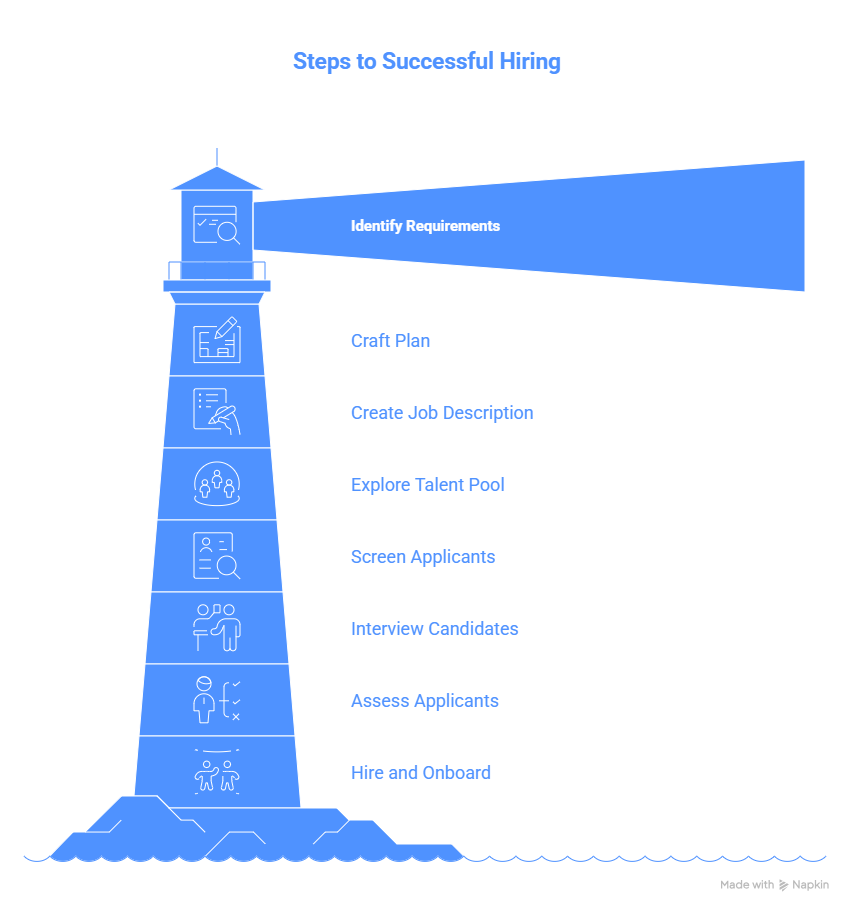
The hiring process is a systematic series of stages that the HR teams at organizations follow to identify, attract, assess, and hire qualified candidates for available positions. It encompasses every activity from recognizing a job opening to successfully onboarding a new employee.
A streamlined and optimized hiring and recruitment process ensures that the right people are hired for open positions. The challenge is not just about filling open positions, but about finding the right candidates quickly, fairly, and consistently. Relying on a fully manual hiring process, organizations are ill equipped to meet the complex and competitive requirements of modern recruitment.
A well-optimized hiring process minimizes such risks by creating consistency and efficiency at every step. It streamlines workflows, integrates technology, and ensures fairness in candidate evaluation by transforming recruitment from an administrative function into a strategic advantage. Adopting modern technology for optimizing recruitment processes helps HR teams hire faster and improve the quality of hires.
This comprehensive guide explores the meaning of the hiring process, steps in the hiring process, how long it takes, and actionable strategies that focus on how to improve the hiring process.
The goal is not merely to hire quickly but to hire effectively by finding candidates who possess the necessary skills, align with company values, and contribute positively to the organization’s long-term goals. A structured hiring process creates consistency across departments, reduces unconscious bias, and ensures data-backed decision-making.
For employers, it brings efficiency, scalability, and a stronger employer brand. For candidates, it provides clarity, fairness, and a positive experience that reflects the organization’s professionalism.
Why A Strong Hiring Process Matters
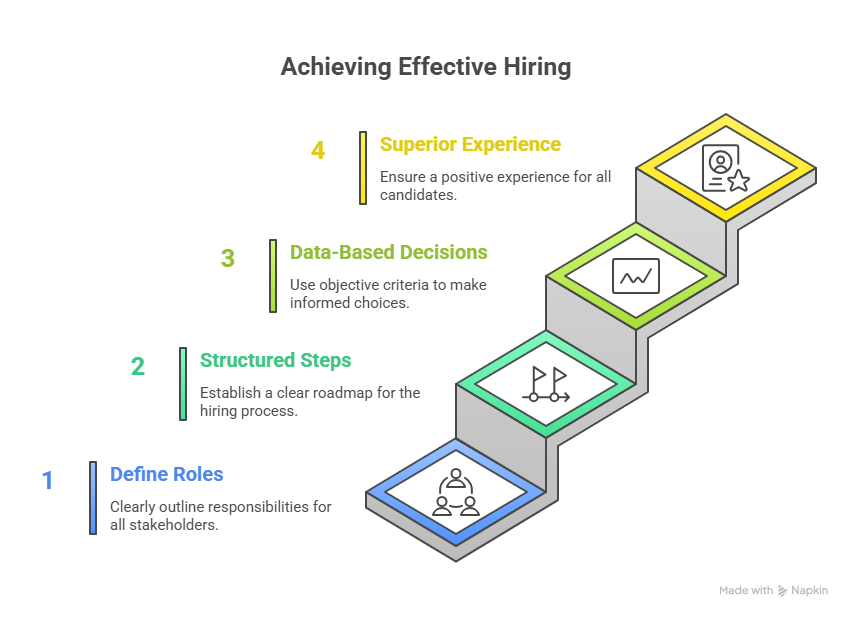
An effective hiring process impacts nearly every aspect of a business. It affects productivity, culture, employee retention, and overall profitability. Organizations with defined recruitment workflows typically experience lower turnover and higher employee satisfaction because they make informed and fair hiring decisions.
A structured process also enhances transparency and accountability among recruiters and hiring managers. When roles, responsibilities, and evaluation criteria are clearly defined, hiring teams work more cohesively and make decisions based on objective data rather than instinct.
Additionally, a strong hiring process helps companies build a competitive edge in the talent market. Candidates are more likely to choose organizations that offer a smooth, respectful, and transparent experience, even if other offers exist.
Steps In The Hiring Process
While hiring practices vary across organizations, most follow a standard set of stages that guide the recruitment journey. Below are the major steps that define an effective employment process.
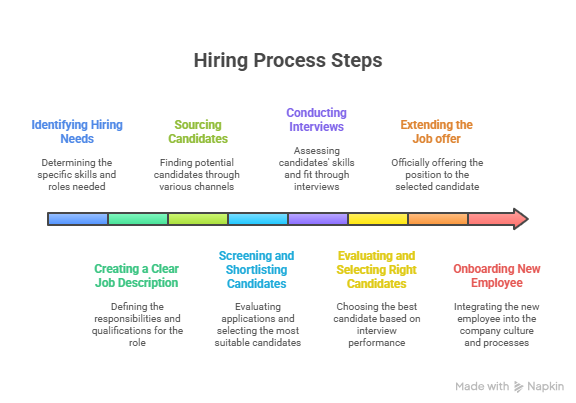
Step 1: Identifying The Hiring Need
The first stage in the hiring process is identifying the need for a new employee. This could arise due to workforce expansion, a new project, employee turnover, or organizational restructuring.
At this point, hiring managers and department heads collaborate to define the nature of the role, key responsibilities, skills required, and performance expectations. The focus should be on clarity, understanding exactly what the organization needs and why.
For example, if a company plans to expand its marketing operations, leaders must decide whether the need is for a social media strategist, a content marketer, or a data analyst. Such distinctions help attract the right candidates from the beginning.
Step 2: Crafting A Clear Job Description
A job description acts as the blueprint for recruitment. It communicates to potential applicants what the role entails, what qualifications are expected, and what success looks like. A well-written job description includes key components such as responsibilities, required experience, technical skills, soft skills, and cultural attributes.
Clarity in job descriptions reduces irrelevant applications and sets realistic expectations for candidates. In addition, highlighting growth opportunities, company culture, and benefits can make job postings more appealing, enhancing applicant quality and engagement.
Step 3: Sourcing Candidates
Once the role is defined, the next step is to attract suitable candidates. Sourcing strategies depend on the role type, urgency, and industry trends.
Common sourcing channels include online job boards, company career pages, employee referral programs, professional networks, and social media platforms like LinkedIn. Some companies also collaborate with recruitment agencies or attend job fairs for bulk hiring.
Practicing proactive sourcing by reaching out to passive candidates who aren’t actively job hunting, is another effective strategy. This method is particularly useful for specialized or senior positions where talent availability is limited.
Step 4: Screening And Shortlisting Candidates
Screening helps recruiters filter out unqualified candidates from the large pool of applicants. Traditionally, this involved manual resume reviews, but modern recruitment now relies heavily on automated screening tools.
Applicant tracking systems (ATS) and AI-powered filters can analyze resumes based on predefined keywords, experience levels, and skillsets. Some organizations also use pre-employment assessments to evaluate cognitive abilities, technical knowledge, and personality traits.
Shortlisting candidates ensures that only the most suitable individuals proceed to the next phase of interviews, saving valuable time for both recruiters and hiring managers.
Step 5: Conducting Interviews
Interviews are the heart of the recruitment hiring process. They allow employers to evaluate a candidate’s competence, mindset, and potential cultural fit. Depending on the role and company size, interviews can take several forms, phone screenings, video calls, technical interviews, or in-person panel discussions.
Structured interviews, where every candidate is asked the same set of standardized questions, promote fairness and consistency. Behavioral and situational questions are particularly valuable in assessing how candidates think, communicate, and respond to challenges.
For instance, asking, “Describe a time when you resolved a workplace conflict” provides deeper insights into emotional intelligence and problem-solving skills.
Step 6: Evaluating And Selecting The Right Candidate
After interviews, recruiters and hiring managers collectively assess candidate performance using evaluation forms, scoring rubrics, or digital dashboards. This collaboration ensures decisions are based on a mix of quantitative and qualitative data.
A fair selection process considers both technical proficiency and soft skills. Candidates who meet role requirements but also align with company values are more likely to succeed and stay long-term.
Many organizations now employ selection tools for hiring, such as personality assessments or work simulations, to predict future performance more accurately.
Step 7: Extending The Job Offer
Once the ideal candidate is selected, a formal offer is extended. The offer letter should outline essential details, such as job title, salary, benefits, work schedule, and start date.
Timing is critical during this stage. Delayed offers can lead to candidate drop-offs, especially in competitive markets. Automating this stage through digital offer generation systems helps HR teams issue documents quickly while maintaining compliance.
Step 8: Onboarding The New Hire
The final step of the hiring process is onboarding. Effective onboarding integrates the new employee into the company’s culture, systems, and workflows. It helps build confidence, engagement, and productivity from the first day.
Onboarding should include a structured plan, marked by orientation sessions, introduction to teams, policy briefings, and initial performance goals. Digital onboarding platforms make it easier to manage documents, provide online training modules, and ensure consistency across departments.
An efficient onboarding process completes the employment cycle by ensuring the new hire feels welcomed, supported, and aligned with the organization’s mission.
How Long Does The Hiring Process Take?
The duration of the hiring process varies depending on the industry, role complexity, and company structure. Entry-level positions may be filled in a few weeks, while senior or technical roles may take several months.
Generally, the process can last anywhere between 14 to 45 days. Factors influencing the timeline include:
- The number of interview rounds
- Availability of hiring managers
- Background verification and reference checks
- Internal approvals for compensation or budget
Companies aiming to shorten this timeline should focus on process optimization, by eliminating redundant steps, using automation for screening, and improving communication between departments.
How Long Does The Hiring Process Take After Interview?
After the final interview, the average waiting period before receiving an offer is typically one to three weeks. However, this can vary based on the organization’s internal decision-making speed and the complexity of the role.
Background checks, reference verification, and compensation negotiations are common reasons for delays. To maintain candidate engagement during this phase, recruiters should communicate updates regularly, even if the decision is pending.
Automated feedback systems and personalized follow-up messages help sustain interest and prevent candidates from accepting competing offers.
How To Improve The Hiring Process
Improving the hiring process is an ongoing effort that focuses on efficiency, consistency, and candidate satisfaction. Below are strategies that organizations can adopt to enhance their recruitment systems.
Streamline Communication
Effective communication is the cornerstone of successful recruitment. Delays in feedback or unclear instructions create confusion and frustration. Centralized communication platforms help hiring teams stay aligned and keep candidates informed at every stage.
Automate Routine Tasks
Automation tools can handle repetitive activities such as scheduling interviews, filtering applications, and sending status updates. This reduces administrative workload and allows recruiters to focus on evaluating talent and improving engagement.
Implement Selection Tools For Hiring
Using pre-employment assessments, psychometric tests, and work simulations provides data-driven insights into candidate suitability. These tools minimize bias, improve accuracy, and help predict future job performance.
Focus On Candidate Experience
Every touchpoint, starting from the application form to the onboarding stage, shapes a candidate’s perception of the company. Personalized interactions, timely updates, and transparent communication foster trust and enhance the organization’s reputation.
Track Recruitment Metrics
Monitoring metrics such as time-to-hire, offer acceptance rate, and cost-per-hire helps identify inefficiencies. Data analysis enables continuous process improvement and helps HR leaders align hiring performance with business objectives.
Collaborate Across Teams
Recruitment is most effective when HR, management, and operations teams work collaboratively. Department heads should be involved in defining job criteria, interviewing candidates, and evaluating cultural alignment.
Hiring Process Optimization Techniques
Optimizing the recruitment process means fine-tuning every step to balance quality with speed. Here are proven techniques that make recruitment more effective and scalable.
- Standardize Workflows: Document hiring steps and ensure every recruiter follows consistent procedures.
- Adopt Applicant Tracking Systems: Centralize all candidate information for easier monitoring and collaboration.
- Leverage Analytics: Use predictive analytics to identify top sources of talent and anticipate hiring trends.
- Create Structured Interview Templates: Standardized questions ensure fairness and reduce unconscious bias.
- Continuous Feedback: Gather feedback from both recruiters and candidates to identify improvement areas.
The Role Of Technology In Streamlining The Hiring Process
Technology has revolutionized recruitment. From AI-powered resume screening to virtual interviews and digital onboarding, automation has simplified even the most complex processes.
Artificial intelligence helps identify top candidates faster by analyzing large datasets and matching skills with job requirements. Predictive analytics forecast hiring needs, while chatbots manage candidate queries and scheduling.
End-to-end platforms integrate sourcing, assessment, and onboarding into a single workflow, ensuring seamless communication between teams and applicants. This digital transformation has made hiring faster, fairer, and more cost-effective than ever before. Using pre-employment skill assessment software like Skillrobo can streamline and enhance the effectiveness of the hiring process significantly.
How Skillrobo Enhances The Hiring Process
Skillrobo is a powerful recruitment automation and talent assessment platform designed to streamline and optimize the hiring process from end to end. It provides organizations with the tools to evaluate candidates accurately, reduce time-to-hire, and ensure that every hiring decision is data-driven, consistent, and fair.
In an era where companies are competing for top talent, Skillrobo transforms recruitment into a seamless digital experience by automating repetitive tasks and improving decision quality. It helps hiring teams go beyond resumes to assess skills, behavior, and cultural fit, which ensures that the right candidates are selected faster and with greater confidence.
Intelligent Candidate Assessment
Skillrobo offers a comprehensive suite of pre-employment assessments that evaluate technical proficiency, cognitive ability, and interpersonal behavior. Recruiters can choose from a library of standardized tests or create custom assessments tailored to specific job roles and competency frameworks.
These assessments provide objective insights into a candidate’s strengths, weaknesses, and overall suitability for the role. Whether hiring software engineers, marketing professionals, or customer service representatives, Skillrobo ensures that candidates are measured against consistent performance criteria.
Behavioral And Psychometric Evaluation
Hiring is not only about technical skills, it is also about understanding personality and behavioral tendencies. Skillrobo’s behavioral and psychometric assessment modules measure attributes such as teamwork, leadership potential, integrity, and emotional intelligence.
These insights allow recruiters to predict how candidates will perform in real workplace environments, reducing the risk of mis-hires and improving long-term retention. By integrating psychological evaluation into recruitment, Skillrobo supports more holistic hiring decisions.
Automated Screening And Shortlisting
Screening hundreds or thousands of applications manually can slow down the hiring process significantly. Skillrobo’s automation engine filters candidates using AI-based algorithms that analyze resumes, test results, and assessment data.
This automation reduces administrative workload and eliminates human bias, ensuring that only qualified candidates advance to the next stage. The system also provides recruiters with instant reports summarizing candidate performance, making shortlisting faster and more accurate.
Streamlined Interview Coordination
Skillrobo simplifies interview scheduling and coordination by integrating with popular communication and calendar platforms. Recruiters can schedule interviews automatically, send reminders, and manage availability in real time.
This reduces scheduling conflicts, shortens turnaround times, and enhances the candidate experience. Interviewers also gain access to digital scorecards and performance data, helping them evaluate candidates with objectivity and efficiency.
Real-Time Analytics And Reporting
One of Skillrobo’s most valuable features is its analytics dashboard, which offers a detailed view of recruitment performance. Recruiters can track time-to-hire, candidate quality, assessment completion rates, and overall process efficiency.
By turning hiring data into actionable insights, Skillrobo enables continuous improvement. HR leaders can identify trends, forecast hiring needs, and make evidence-based decisions that align with long-term workforce strategies.
Seamless Integration With Hiring Systems
Skillrobo integrates easily with existing Applicant Tracking Systems (ATS), Human Resource Management Systems (HRMS), and onboarding platforms. This interoperability ensures that all recruitment data flows seamlessly between systems without duplication or data loss.
Such integration allows organizations to create a unified digital hiring ecosystem, one that connects sourcing, assessment, selection, and onboarding into a single streamlined process.
Scalable For Mass And Specialized Hiring
Whether a company is hiring ten people or a thousand, Skillrobo scales effortlessly to handle high-volume recruitment. Its automated workflows and cloud-based infrastructure make it ideal for enterprises conducting large-scale hiring drives or seasonal recruitment campaigns.
At the same time, it remains highly adaptable for specialized hiring, which allows recruiters to design focused assessments for niche roles or senior positions. This flexibility ensures that Skillrobo meets the needs of organizations of all sizes and industries.
Enhancing Candidate Experience
Candidate experience is one of the most important metrics in modern recruitment. Skillrobo ensures transparency and engagement throughout the process by providing automated updates, feedback mechanisms, and intuitive assessment interfaces.
Candidates can complete assessments easily from any device, while recruiters can communicate results promptly. This creates a sense of professionalism and trust that strengthens the organization’s employer brand.
Supporting Data-Driven Recruitment Decisions
Skillrobo empowers recruiters and HR leaders to make hiring decisions based on data rather than intuition. By combining skill assessments, behavioral analysis, and performance analytics, it ensures that every hire is backed by objective evidence.
Data-driven hiring not only improves accuracy but also fosters diversity, fairness, and compliance. Skillrobo’s transparent evaluation framework ensures that each candidate is judged solely on merit and measurable competencies.
Driving Long-Term Value
Beyond immediate hiring needs, Skillrobo supports long-term organizational development by helping build a talent database of high-quality candidates. Recruiters can revisit previous assessment data for future roles, reducing sourcing time and improving hiring agility.
This forward-looking approach turns recruitment into a strategic function that continuously strengthens the company’s workforce and performance capabilities.
In essence, Skillrobo transforms the traditional hiring process into a modern, automated, and data-driven experience. It eliminates inefficiencies, enhances fairness, and ensures that every hiring decision contributes to organizational success.
From pre-screening to onboarding, Skillrobo empowers HR teams to focus on what truly matters, which is identifying and nurturing the right talent for the future.
Wrapping Up
The hiring process is much more than expanding your workforce, it is about building a highly skilled and competent workforce that is aligned to the organizational goals and objectives. A well-structured process ensures that every hire contributes positively to the company’s mission and growth.
By following clear hiring process steps, automating skills assessment, and continuously refining recruitment strategies, organizations can attract and retain top talent more effectively. Optimized hiring processes lead to better candidate experiences, stronger teams, and measurable business outcomes.
Going by the current recruitment trends, employers that invest in technology-driven recruitment and analytics-driven decision-making stay ahead of the curve. Gain high ROI by investing in an AI-driven pre-employment skills assessment tool like Skillrobo. Try our tool today!
FAQs
1. What are the main steps in the hiring process?
The hiring process typically includes identifying the job need, crafting the job description, sourcing candidates, screening, interviewing, evaluation, offering, and onboarding.
2. How long does the hiring process take?
It usually takes between 2 to 8 weeks depending on role complexity, industry, and company procedures.
3. How long does it take after an interview to get an offer?
On average, companies take 1 to 3 weeks after the final interview to finalize and communicate offers.
4. What are the best ways to improve the hiring process?
Organizations can improve by automating repetitive tasks, standardizing workflows, enhancing communication, and using objective selection tools.
5. What is hiring process optimization?
Hiring process optimization means refining recruitment workflows to make them faster, more accurate, and candidate-friendly through the use of data and technology.