Incorporating Behavioral Aptitude Tests in the Hiring Process
Key Takeaways
Behavioral aptitude tests provide valuable insights into candidate behavior, communication patterns, and decision-making style, revealing traits not captured in resumes.
These assessments help minimize hiring bias, align cultural expectations, and reduce early attrition by identifying mismatches before onboarding begins.
Behavior-based assessments improve role alignment, boost engagement, and increase retention by evaluating how candidates handle real-world workplace challenges.
Structured behavioral data allows recruiters to make faster, evidence-based decisions while ensuring fairness and consistency across hiring stages.
Behavioral Aptitude Tests – Hiring for Skill Isn’t Enough Anymore
Resumes highlight qualifications. Interviews reveal communication. But neither truly uncovers how a candidate will behave when things go wrong, or when they’re leading a team. That’s where behavioral aptitude tests shine. Hiring is no longer about credentials alone. Adaptability, collaboration, and cultural alignment are the cornerstones on which successful teams are built.
Behavioral assessments offer objective insights into how a person thinks, reacts, and fits into your organizational fabric before they even walk through the door. In this blog, we break down the purpose, value, and best practices for incorporating behavioral aptitude tests in the hiring process.
What Is a Behavioral Aptitude Test?
A behavioral aptitude test evaluates how a person is likely to behave in workplace scenarios. Unlike technical tests, which measure what a person knows, these assessments predict how they respond to stress, feedback, teamwork, and deadlines. Incorporating behavioral aptitude tests in the hiring process has become critical for data-driven hiring.
Behavioral assessment test for employment focus on analyzing a candidate’s past behavior in specific situations to predict future job performance. This method contrasts with traditional recruitment techniques, such as unstructured interviews, by emphasizing tangible examples of how candidates have responded to challenges, interacted in team settings, or demonstrated problem-solving abilities.
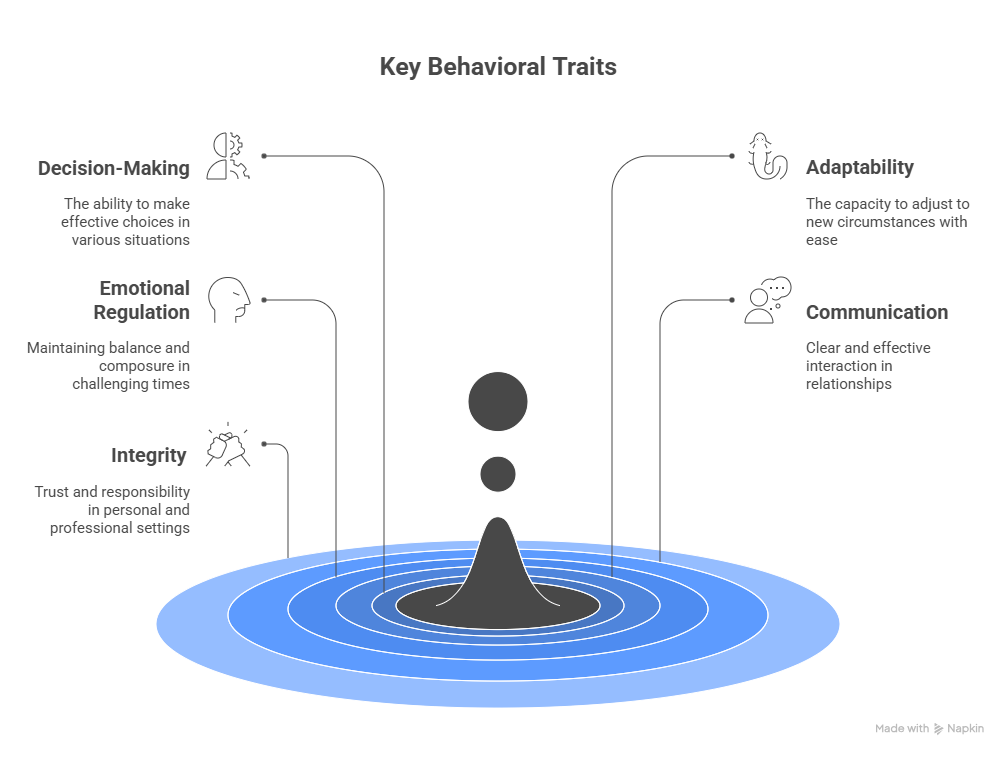
They typically cover:
- Decision-making Style– Assesses how candidates analyze situations, weigh options, and choose actions under pressure. It reveals their level of confidence, logic, and judgment.
- Adaptability to Change– Evaluates how well individuals adjust to shifting priorities or unexpected challenges. Adaptable candidates are more resilient in dynamic environments.
- Emotional Regulation– Measures how candidates manage stress, stay composed, and handle feedback. Strong emotional control leads to better interpersonal dynamics.
- Communication Tendencies – Analyze how individuals express ideas, listen, and respond in conversations. It helps predict collaboration and team alignment.
- Integrity and Accountability – Assesses ethical behavior, ownership of tasks, and willingness to admit mistakes. These traits support trust and reliability in the workplace.
The goal isn’t to label candidates, but to understand whether their behavioral tendencies align with the role and company culture.
Types of Behavioral Assessments
Behavioral assessments for hiring are designed to understand how candidates think, react, and perform in real-world work situations. They go beyond technical expertise to evaluate traits such as communication, teamwork, motivation, adaptability, and integrity, factors that determine long-term job success. Organizations use various formats of behavioral aptitude assessments in hiring to measure these competencies objectively and accurately.
1. Personality-Based Behavioral Assessments
Personality assessments are among the most common behavioral tests for employment. They measure traits such as openness, conscientiousness, extraversion, agreeableness, and emotional stability. Employers use these insights to identify candidates whose personalities align with company culture and team dynamics.
2. Situational Judgment Tests (SJTs)
A behavioral assessment test for employment often includes situational judgment questions where candidates choose the best response to workplace scenarios. These tests evaluate decision-making, conflict resolution, and interpersonal communication. They are particularly valuable for roles that require leadership or customer interaction.
3. Cognitive and Emotional Intelligence Assessments
Behavioral aptitude tests sometimes integrate cognitive and emotional intelligence measures to assess reasoning ability and empathy. These tests help identify candidates who can manage emotions, handle pressure, and understand the perspectives of others, which are traits essential for collaborative roles.
4. Work Simulation and Role-Play Exercises
Work simulation exercises recreate real job challenges, allowing employers to observe behavior in action. This type of behavioral test for employment helps assess how candidates prioritize tasks, respond to feedback, and collaborate under realistic conditions.
5. Gamified Behavioral Assessments
To engage candidates and reduce test anxiety, some behavioral hiring assessments use gamification. These tests analyze decision-making, creativity, and adaptability through interactive exercises while keeping the process enjoyable and immersive.
Together, these assessment types give recruiters a holistic view of a candidate’s behavioral tendencies, ensuring the right fit for both role and culture.
Why Behavior Testing Beats Gut-Feeling Hiring
Many hiring decisions still hinge on a “good feeling” about a candidate or a strong interview performance. But relying on instincts, however well-meaning, introduces unconscious bias, inconsistency, and costly mis-hires. Behavioral assessments bring structure and objectivity to the process, providing measurable insight into how a candidate is likely to behave once they’re part of your team.
By understanding behavior before making an offer, companies can predict performance, reduce friction, and ensure long-term alignment, not just short-term charisma. Here’s how behavior testing enhances hiring decisions across the board:
1. Improved Cultural Fit
Culture fit goes beyond shared values, it’s about how people work together. Behavioral assessments reveal whether a candidate’s communication style, pace, and collaboration preferences match the team or department they’re entering.
With tools like identifying personality traits, companies can evaluate candidates for traits such as assertiveness, empathy, and sociability, traits that can make or break team dynamics. Hiring for behavioral alignment results in stronger cohesion, less miscommunication, and a more harmonious workplace from day one.
2. Reduced Turnover Risk
Early attrition is often the result of behavioral misalignment, employees feeling overwhelmed, underprepared, or disconnected from their team or responsibilities. Behavioral assessments help reduce this risk by identifying potential mismatches before they happen.
According to internal research, teams that integrate behavioral assessments into their hiring process report up to 40% fewer exits within the first year. Using behavioral insights along with employee assessment software allows HR teams to create proactive retention strategies and faster onboarding transitions.
3. Better Role Alignment
Not every great candidate will thrive in every role. Someone who excels in independent tasks may struggle in highly collaborative environments and vice versa. Behavioral testing reveals natural tendencies that influence how a candidate will handle structure, autonomy, feedback, or ambiguity.
Using assessments aligned with your hiring goals (like types of assessment to organize hiring) helps recruiters place the right people in the right roles, improving performance and job satisfaction over the long term.
4. Objective Hiring Decisions
Behavioral assessments standardize candidate evaluation, removing guesswork and bias from the decision-making process. This is especially crucial for scaling hiring or high-volume recruitment, where consistency is key.
With support from platforms like the best candidate assessment tools, hiring teams can compare candidates using structured benchmarks and scoring rubrics. This ensures fair, defensible, and data-backed decisions every time.
Behavioral Traits to Measure Based on Role Type
Each job role requires a unique set of behavioral strengths. Understanding which behaviors contribute most to success in a specific position allows recruiters to tailor tests that predict real-world performance, not just potential.
Here’s a breakdown of key traits by role type:
| Role Type | Key Behavioral Traits |
|---|---|
| Sales & Business Development | Resilience under pressure, competitive drive, persuasion, and emotional stamina in high-rejection environments. |
| Customer Support | Empathy, emotional regulation, patience, and calmness under pressure—ideal for frontline interaction roles. |
| Engineering & Tech | Focus, problem-solving, independent thinking, and a preference for structure—critical in task-driven roles. |
| Leadership Roles | Strategic thinking, adaptability, decision-making under uncertainty, and a high degree of ownership. |
| Creative & Marketing | Innovation, curiosity, openness to feedback, and flexibility—essential in dynamic, exploratory environments. |
Tip: Tailoring behavioral assessments by role ensures you’re not just hiring good people, you’re hiring the right people for the right jobs.
When and How to Integrate Behavioral Testing
Behavioral aptitude tests are most effective when they enhance, not replace, your current hiring workflow. Think of them as a strategic layer that reveals how candidates will behave in real scenarios, not just how they present in interviews or on resumes. For maximum impact, behavioral testing should be introduced at multiple touchpoints during the hiring process to guide smarter decisions and reduce risk.
Here’s how to incorporate them seamlessly:
1. Pre-Interview Screening
Introduce short, behavior-focused tests after initial resume filtering. These tests help quickly identify candidates whose behavioral traits align with the role requirements, allowing you to focus interview time on the most promising talent. Using platforms like clerical skills testing can combine basic competency evaluations with behavioral data, streamlining the shortlist process for administrative or task-heavy roles.
Introduce short, behavior-focused tests after initial resume filtering. These tests help quickly identify candidates whose behavioral traits align with the role requirements, allowing you to focus interview time on the most promising talent. Using solutions like clerical skills testing can combine basic competency evaluations with behavioral data, streamlining the shortlist process for administrative or task-heavy roles.
2. During Structured Interviews
Behavioral assessment results make for powerful interview discussion points. If a candidate scores lower on adaptability or collaboration, use real scenarios to explore how they’ve handled similar situations in the past. This adds context and allows candidates to provide nuance beyond test results. It also helps interviewers maintain consistency across candidates, making evaluations fairer and more evidence-based.
3. Pre-Offer Validation
When it’s down to two top candidates with similar technical skills, behavioral insights can be the tie-breaker. Use assessments to compare communication styles, response to pressure, or leadership readiness. This step is especially useful for roles involving stakeholder coordination, client interactions, or cross-functional collaboration, where soft skills often outweigh hard ones.
Benefits of Incorporating Behavioral Aptitude Tests in Hiring
Integrating behavioral aptitude tests into recruitment strategies brings structure, objectivity, and precision to candidate evaluation. These assessments enable employers to predict how an individual will behave and perform once hired, which reduces turnover and improving cultural alignment.
1. Objective Hiring Decisions
Behavioral assessments for hiring standardize the evaluation process by relying on data rather than gut instinct. Recruiters can compare candidates using measurable criteria like teamwork, adaptability, and problem-solving, minimizing unconscious bias and favoritism.
2. Improved Cultural Fit and Team Dynamics
A behavioral test for employment helps identify candidates whose values and working styles align with the company culture. Hiring individuals who naturally fit into the team environment leads to smoother collaboration and higher engagement.
3. Reduced Turnover and Higher Job Satisfaction
By matching personality traits and behavioral patterns with job demands, behavioral hiring assessments help reduce early attrition. Employees who align well with their roles and teams tend to stay longer and perform better.
4. Enhanced Predictive Accuracy
Unlike traditional interviews that may overlook subtle behavioral cues, behavioral tests for employment measure traits linked to success. Predictive analytics from these tests help organizations hire candidates who are more likely to meet performance expectations.
5. Streamlined Recruitment Process
Behavioral assessments for employment testing can be automated and scaled across departments, allowing HR teams to screen large applicant pools quickly. The result is a faster, more consistent, and data-backed recruitment process.
Incorporating these assessments ensures that hiring decisions are both strategic and evidence-based, setting the stage for long-term workforce stability and success.
Common Mistakes to Avoid
Behavioral assessments are powerful tools, but like any hiring tool, they need to be used thoughtfully. Here are some of the most common pitfalls companies face when implementing them and how to avoid them:
1. Treating Scores as Absolute Truths
Assessment results should be seen as starting points for discussion, not final judgments. A candidate’s behavior in a test may be influenced by context, stress, or unfamiliarity with the format. Use results to ask deeper questions, not to disqualify someone outright
2. Using Generic Tests
A one-size-fits-all test won’t deliver meaningful results. Tailor your behavioral assessments to the job’s demands, whether that’s creative agility for marketing or emotional regulation for customer service. Skillrobo supports this flexibility through customizable test templates designed for specific job categories, allowing you to maintain relevance and precision.
3. Skipping debriefs
Many companies skip the feedback loop. But sharing results (even in brief) enhances transparency and trust. Candidates feel respected when they understand how decisions are made, and this boosts your employer brand and candidate experience. Consider offering optional insights post-assessment to differentiate your hiring process from competitors.
4. Ignoring Soft Skills Post-Hire
Don’t stop at hiring. The same behavioral strengths and gaps identified during selection should guide onboarding, training, and leadership development. Ongoing assessments can track progress and unlock internal mobility. Use post-hire tools and performance mapping to ensure that behavioral strengths are nurtured, not forgotten after the first day.
Skillrobo: Behavioral Insights Built for Hiring Teams
Skillrobo offers a customizable suite of pre-employment assessments, including behavior-based evaluations that help hiring teams make smarter, faster decisions. With Skillrobo, you can:
- Tailor assessments to specific behavioral competencies like leadership, collaboration, or risk-taking
- Leverage SEYARC AI to auto-generate questions where test libraries fall short
- Ensure test security with webcam monitoring and browser-switch detection
- Receive categorized, real-time performance analytics for quick shortlisting
- Share tests via public URLs or embed them in career pages
Skillrobo empowers organizations to balance technical skills with human insight, helping you find not just qualified candidates, but the right people for the right roles.
Conclusion
Behavioral aptitude tests are no longer optional. Incorporating behavioural aptitude tests in the hiring process has become a must for unbiased, holistic hiring. In a world where culture, adaptability, and communication drive business success, hiring based on skills alone won’t cut it. By integrating behavioral testing into your hiring process, you reduce misalignment, support diversity, and set your future hires up for long-term success.
Ready to bring behavioral insight into your hiring workflow? Click here to sign up and start building customized behavior assessments with Skillrobo.
FAQs
1. What is the main purpose of a behavioral aptitude test in hiring?
Behavioral aptitude tests help predict how a candidate will act in real work situations. They assess traits like decision-making, communication, and adaptability, offering deeper insights beyond technical skills or resumes.
2. Are behavioral assessments suitable for all job roles?
Yes, but the traits measured should align with the role. For example, resilience and persuasion are key in sales, while patience and emotional regulation are essential in customer support.
3. Can behavioral test results improve the onboarding process?
Absolutely. Insights from behavioral assessments help tailor onboarding, communication, and training plans, ensuring better role fit and faster ramp-up for new hires.